Tribe Megachilini
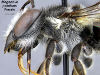
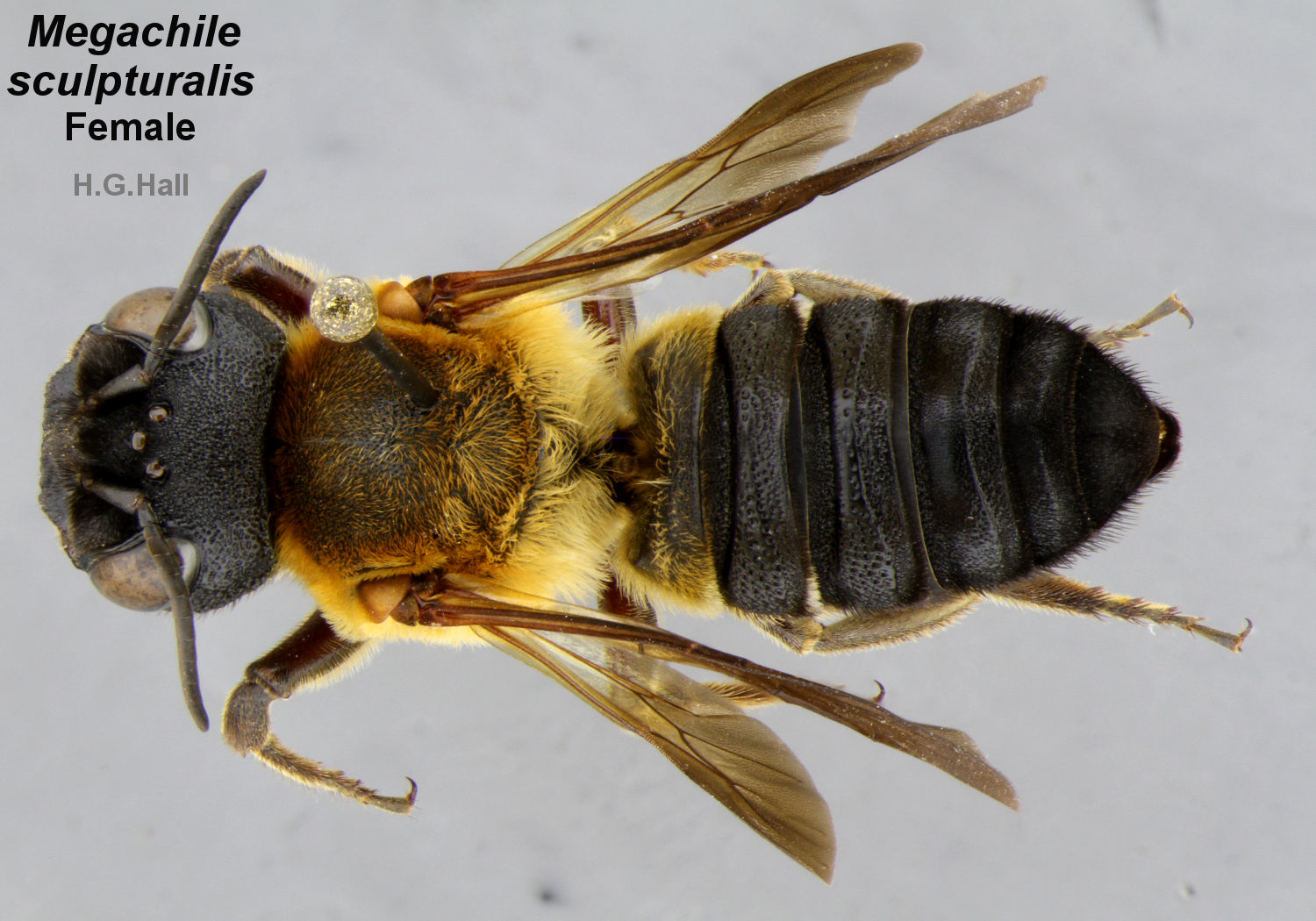
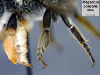
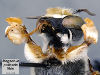
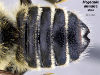
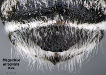
Genus Megachile, 26 taxa
This is a very diverse genus whose species are abundant
throughout Florida. All of the species are moderate to large sized bees with
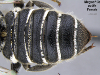
black bodies and white (rarely golden) hairs. Females of most subgenera (except Chelostomoides
that use resin) cut leaves to line their nests, which may be in the ground or in
premade holes in vegetation. The following subgenera (species in parentheses)
known from Florida,
Acentron (1),
Argyropile (2),
Callomegachile (1),
Chelostomoides (4),
Eutricharaea (1),
Leptorachis (1),
Litomegachile (3),
Megachiloides (5),
Melanosarus (2),
Pseudocentron (1),
Pseudomegachile (1),
Sayapis (3), and
Xanthosarus
(2). None of the species are endemic to Florida. Many are widespread in the
eastern United States or common along the SE coastal plain. Three species are
endemic to the SE from N. Carolina to Florida. Two species are of introduced
origin. While most species are widespread and likely occur throughout the state,
a few species are geographically restricted to South Florida (M. inimica
sayi, M. inimica inimica, M. bahamensis, M. pruina pruina, M. lanata, and M.
concinna). Many are polylectic with legumes and composites favorite pollen
sources. Most have long flight periods, although members of the subgenus Megachiloides
have more restricted flight periods.
Keys to subgenera of Megachile known from Florida (modified from Michener 2000)
Female
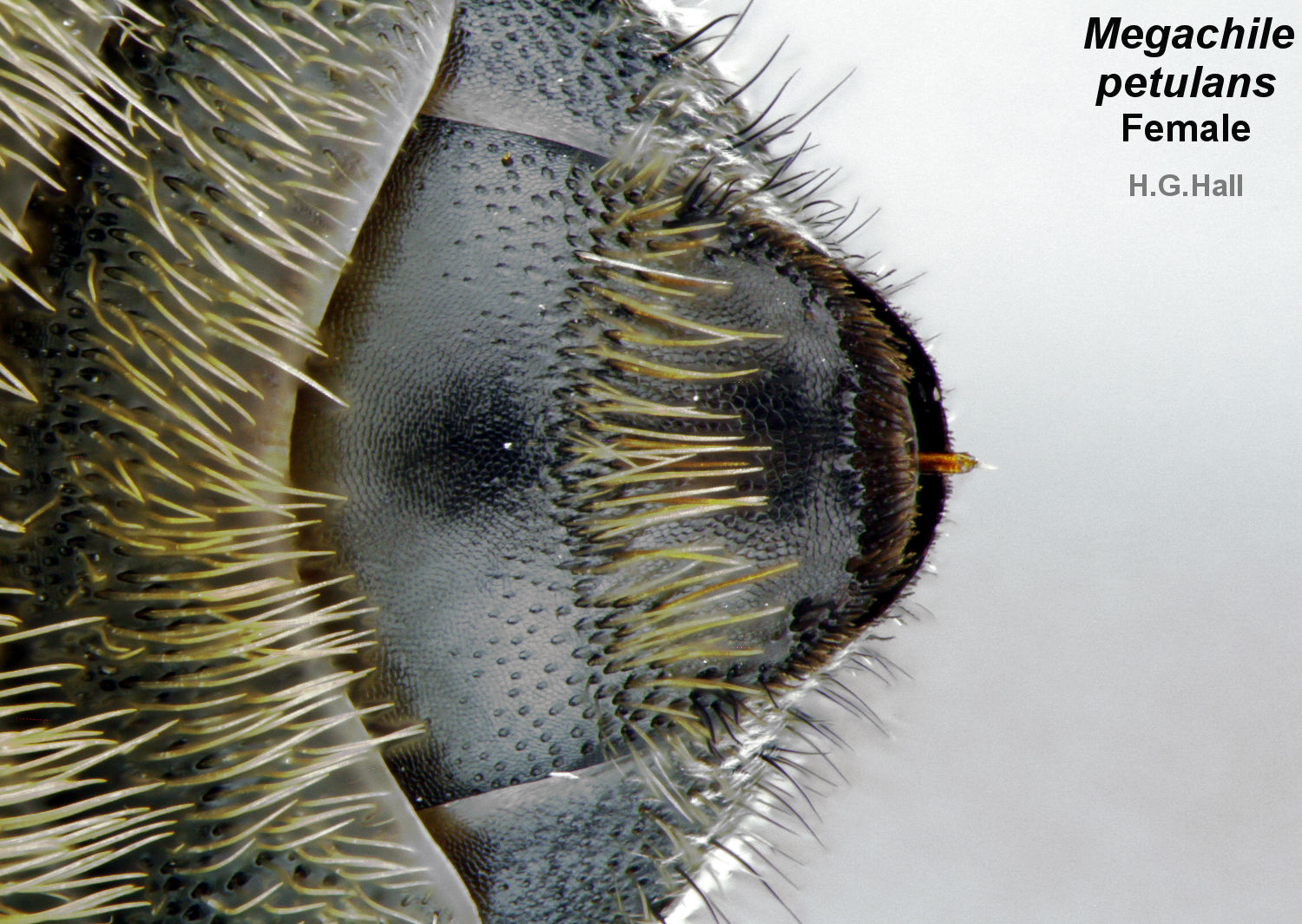
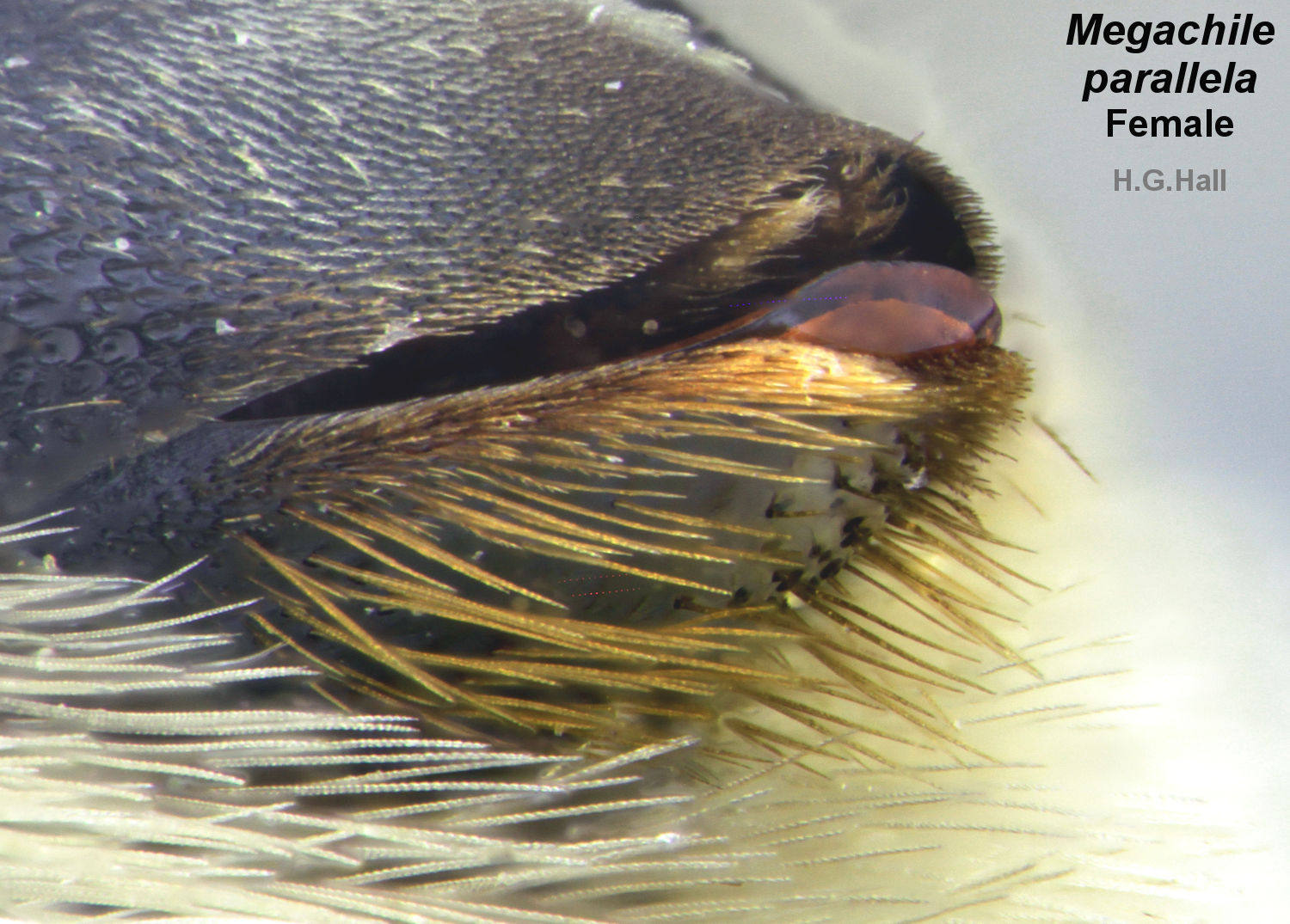
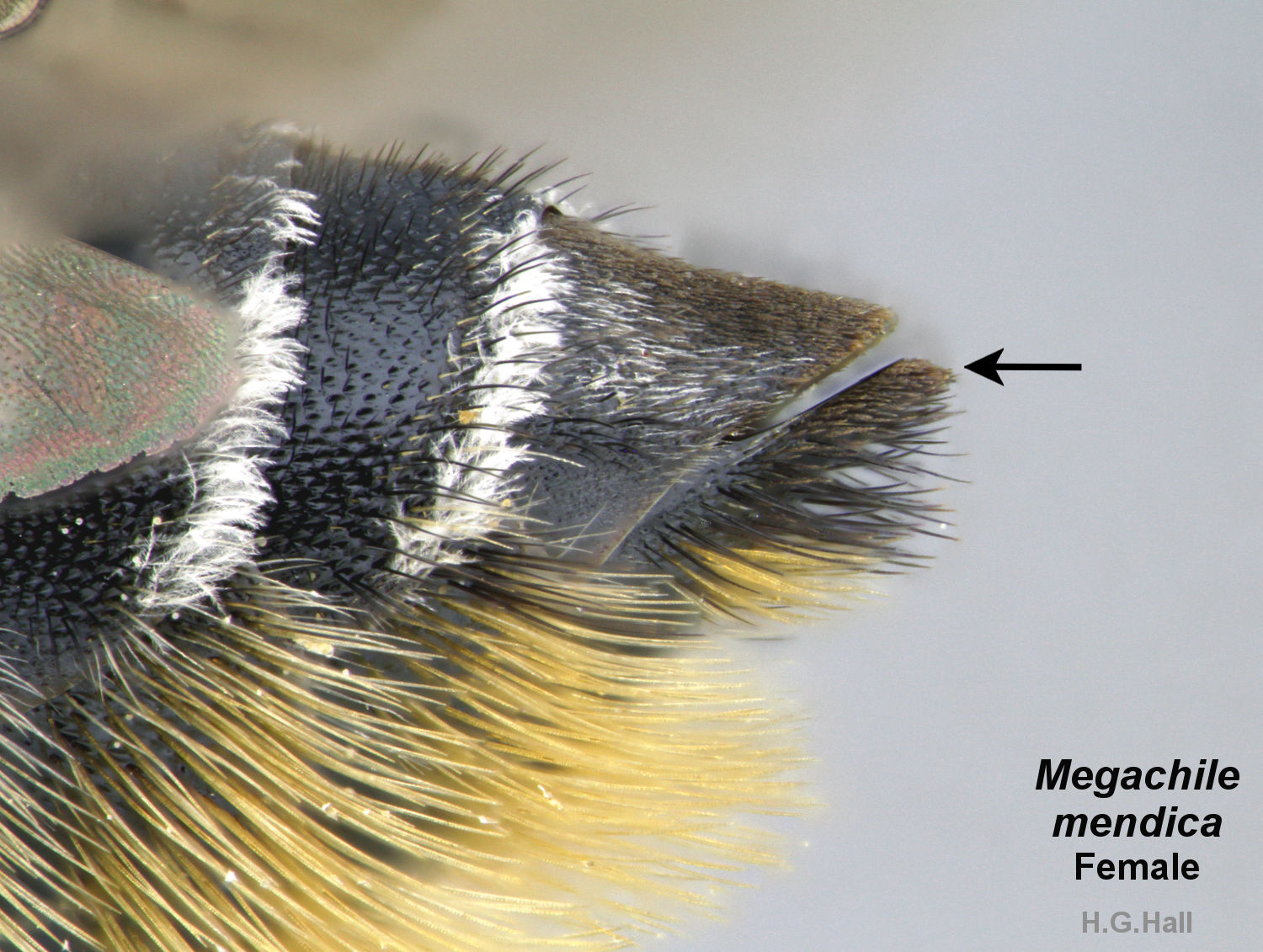
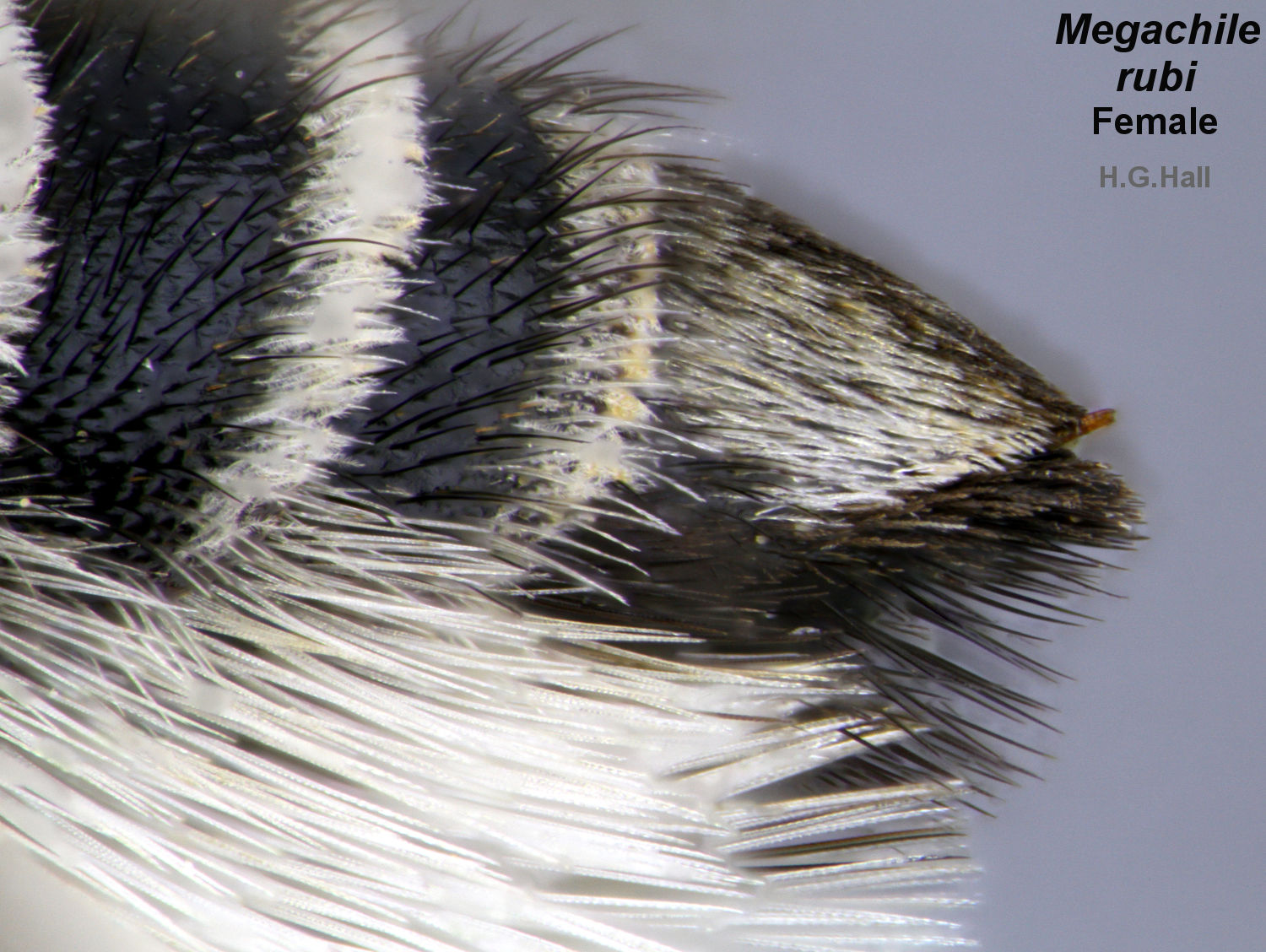
- S6 with at least posterior half bare or nearly so, except for subapicalrow of short hairs, behind which is bare, smooth rim, directed posteriorly (body megachiliform)..2
S6 with well-dispersed scopal hairs, or, if partly bare, then without bare apical rim behind transverse fringe of short hairs, or (in Argyropile) rim directed upward, or rim narrow and barely recognizable..5
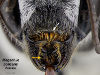
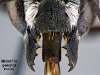
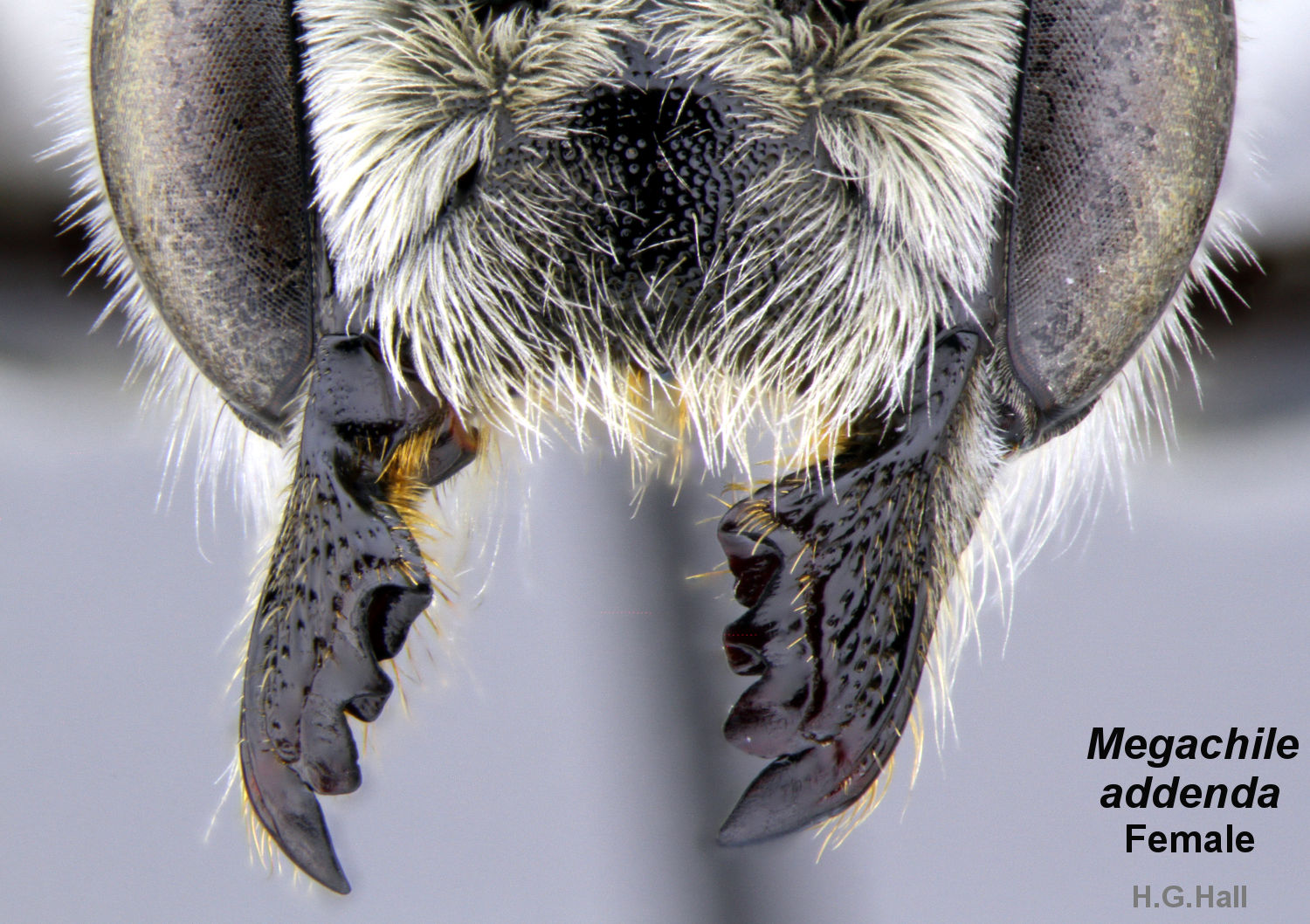
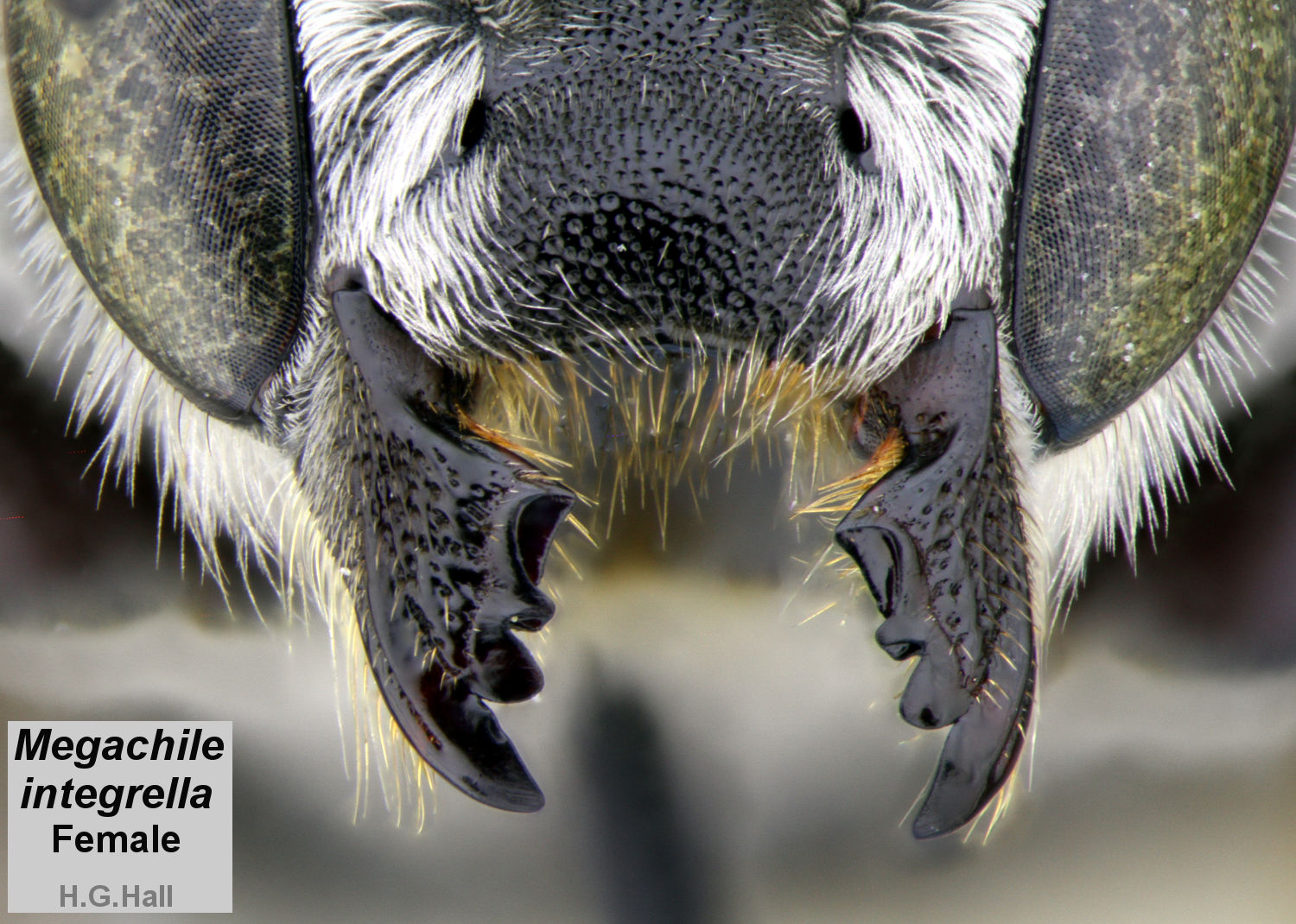
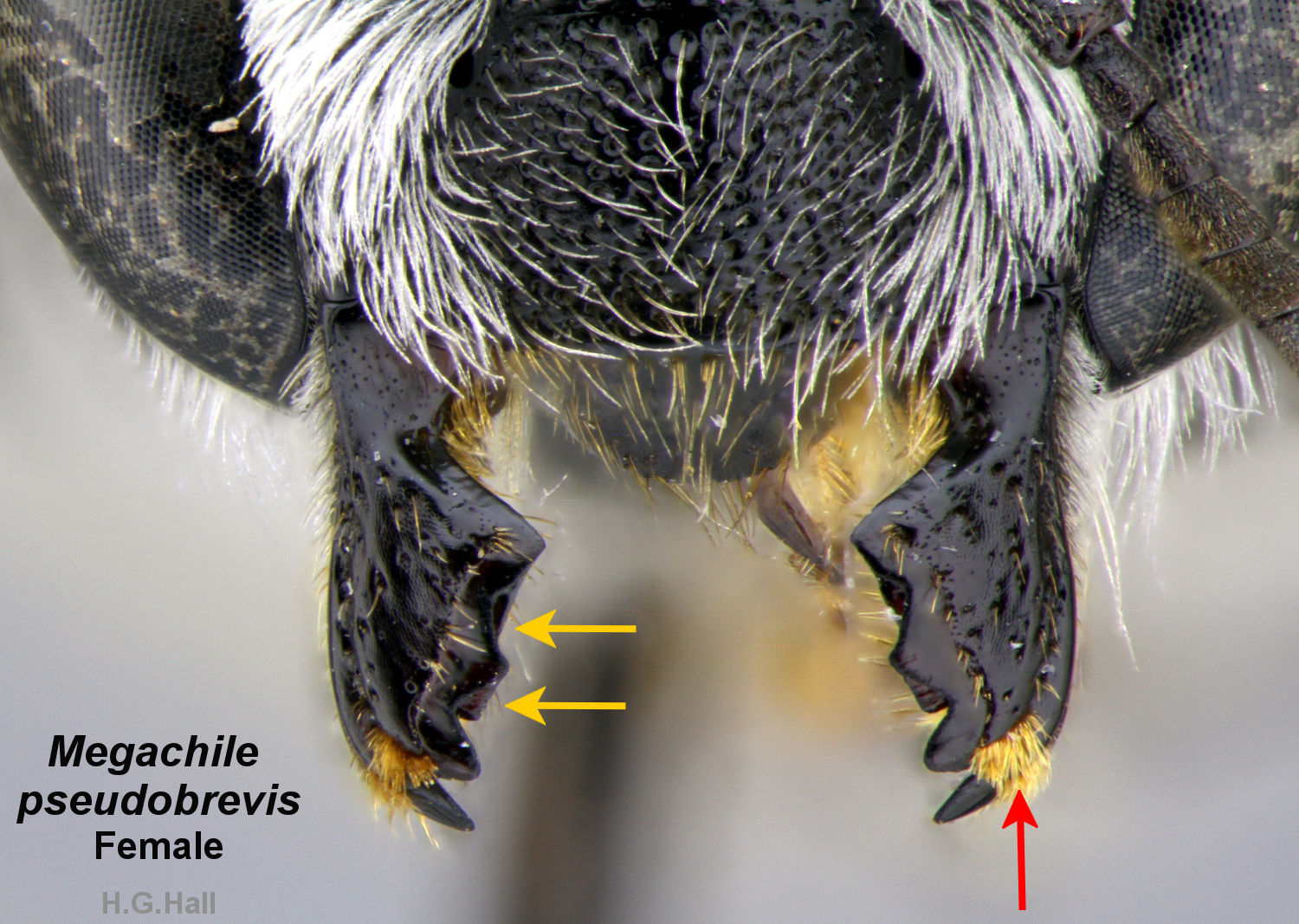
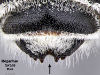
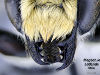
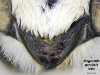
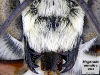
- Mandible five-toothed, a long cutting edge in second interspace, none elsewhere..M. (Melanosarus)
Mandible four-toothed, a well-formed cutting edge in third interspace..3
- Second interspace distinct, with cutting edge usually present..M. (Pseudocentron)
Second interspace lacking or small, without cutting edge..4
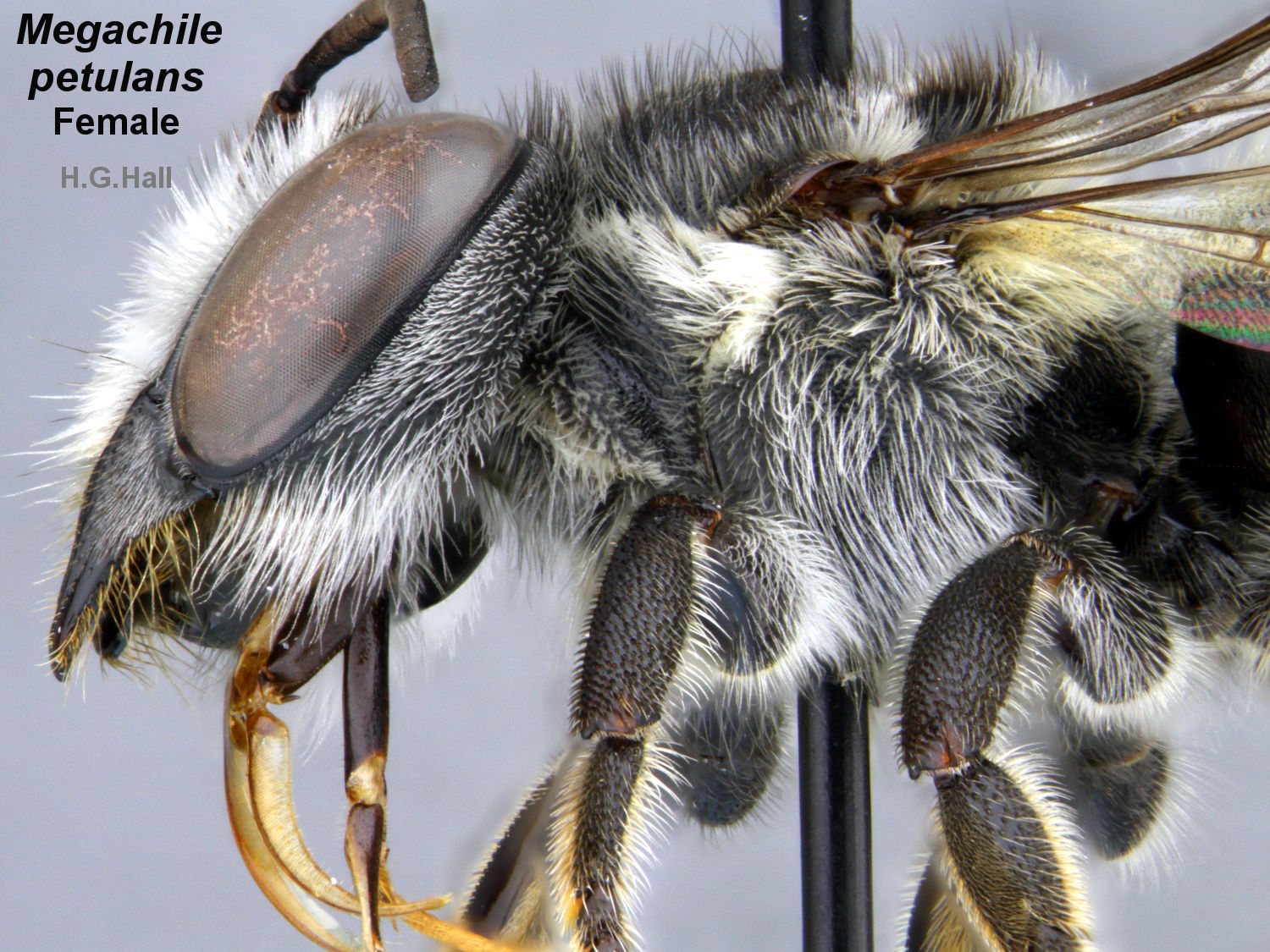
- Mandible more robust, apical tooth more protuberant, much broader than other teeth; gena usually broader than eye in lateral view. .M. (Acentron)
Mandible less robust, apical tooth not much broader than second or third; gena usually narrower..M. (Leptorachis)
- Mandible without cutting edges between teeth, or with incomplete cutting edge in second interspace only; mandible with less than five teeth, or if five toothed, then upper two teeth (4 and 5) usually closer together than teeth 3 and 4..6
Mandible with cutting edges between teeth, if in second interspace only, then edge complete (in three toothed mandible) or mandible clearly five-toothed, with teeth 4 and 5 about as far apart as 3 and 4...9
- Mandible with incomplete cutting edge in second interspace, and no cutting edge elsewhere..M. (Sayapis)
Mandible without cutting edges..7
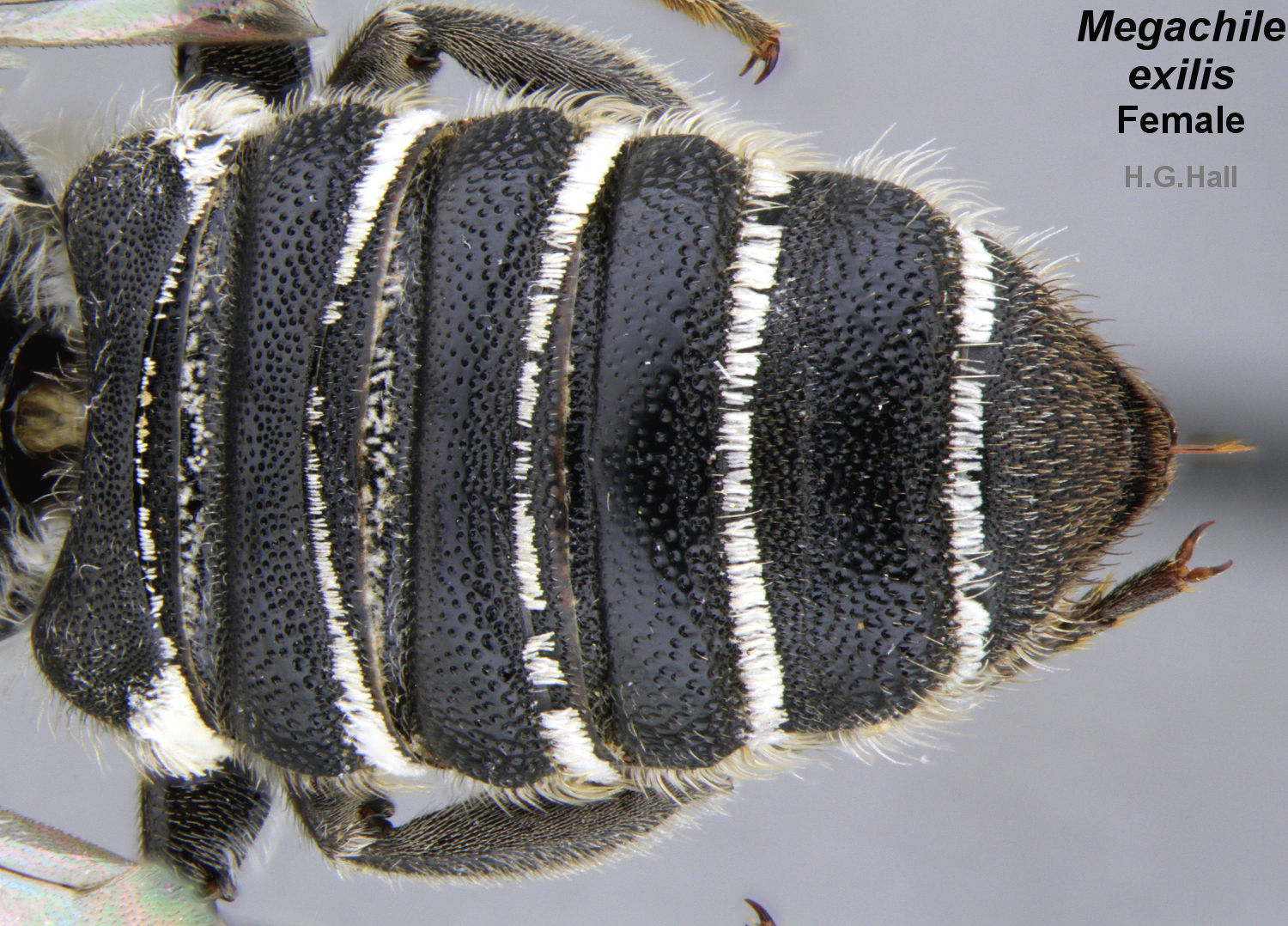
- Pubescence largely white, not fulvous, forming narrow white apical bands on metasomal terga and sometimes narrow bands on postgradular grooves..M. (Chelostomoides)
Pubescence with large areas of black or fulvous, forming striking color pattern ..8
-
Mandibular carinae minutely roughened, sometimes dull..M. (Callomegachile)
Mandibular carinae shining and smooth..M. (Pseudomegachile)
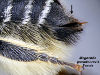
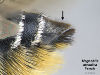
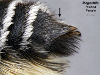
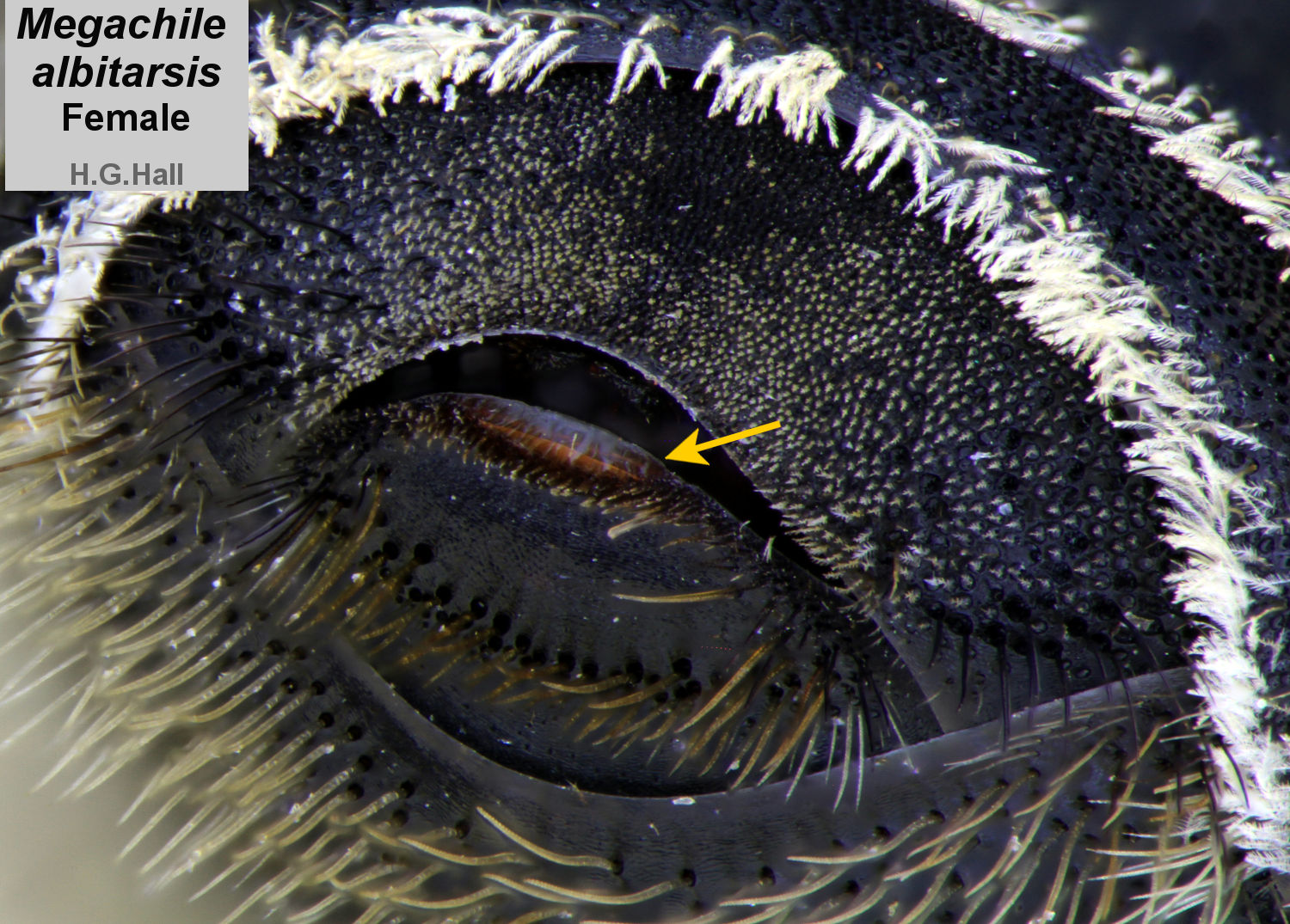
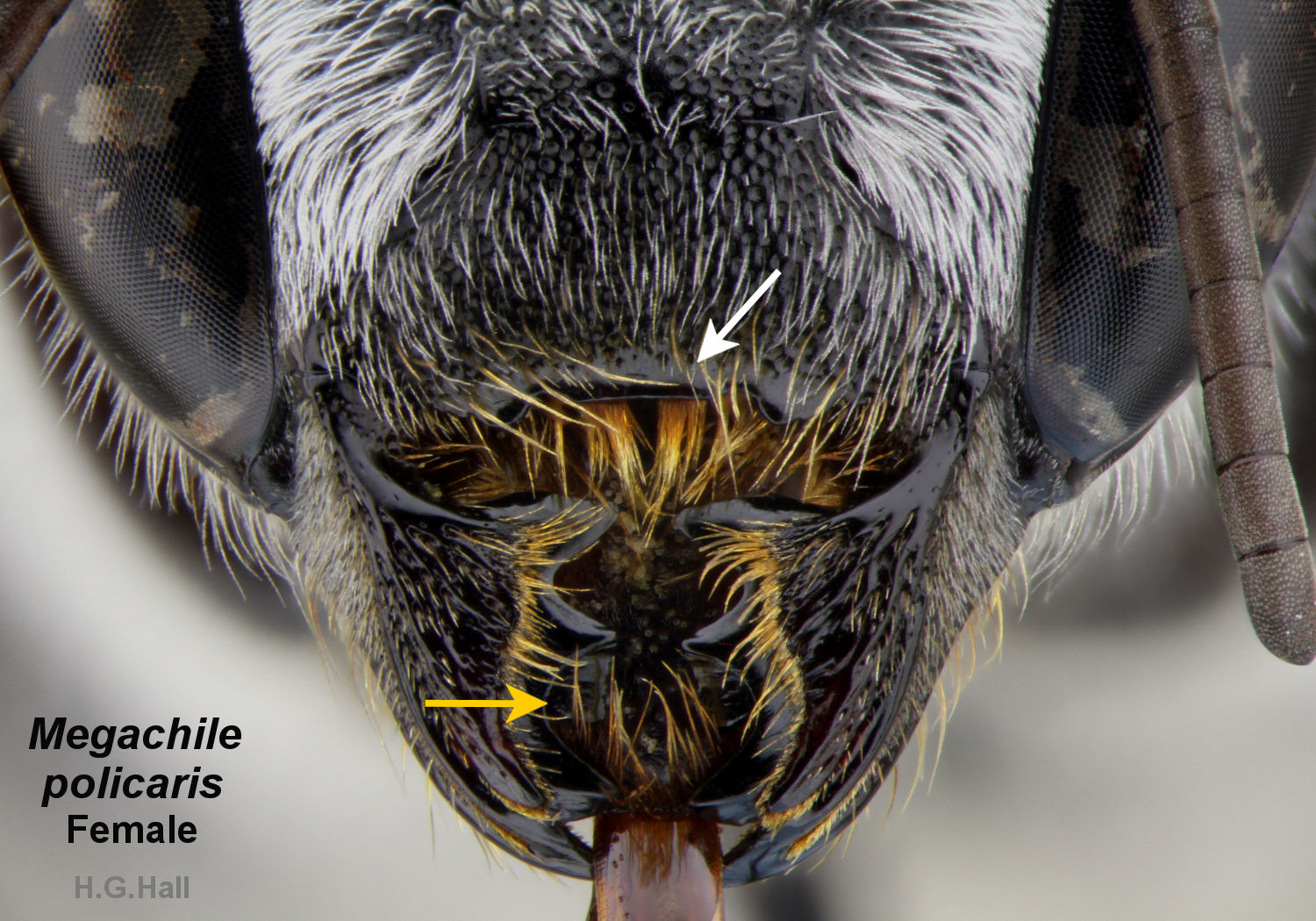
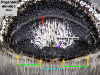
- S6 with apical rim directed upward beyond fringe of hairs, this rim conspicuous if tergum and sternum are spread apart. .M. (Argyropile)
S6 without apical rim, or, if rim present, than directed posteriorly and usually inconspicuous..10
- Mandible three-toothed or median tooth weakly divided and mandible thus obscurely four-toothed, with cutting edge limited to upper interspace (Second if mandible tridentate, third if mandible quadridentate)..M. (Megachiloides, in part)
Mandible four- or five-toothed, with cutting edges in third and usually second interspaces, or rarely in second only..11
- Metasomal sterna with entire and copious white apical hair fasciae beneath scopa. .M. (Eutricharaea)
Metasomal sterna with white hair fasciae absent or broadly interrupted medially..12
- Mandible four-toothed, upper tooth acute or right-angular..13
Mandible four or five-toothed, but if four-toothed, then upper tooth rounded, truncate, or incised (sometimes only minutely) and thus approaching the five-toothed condition...M. Xanthosarus
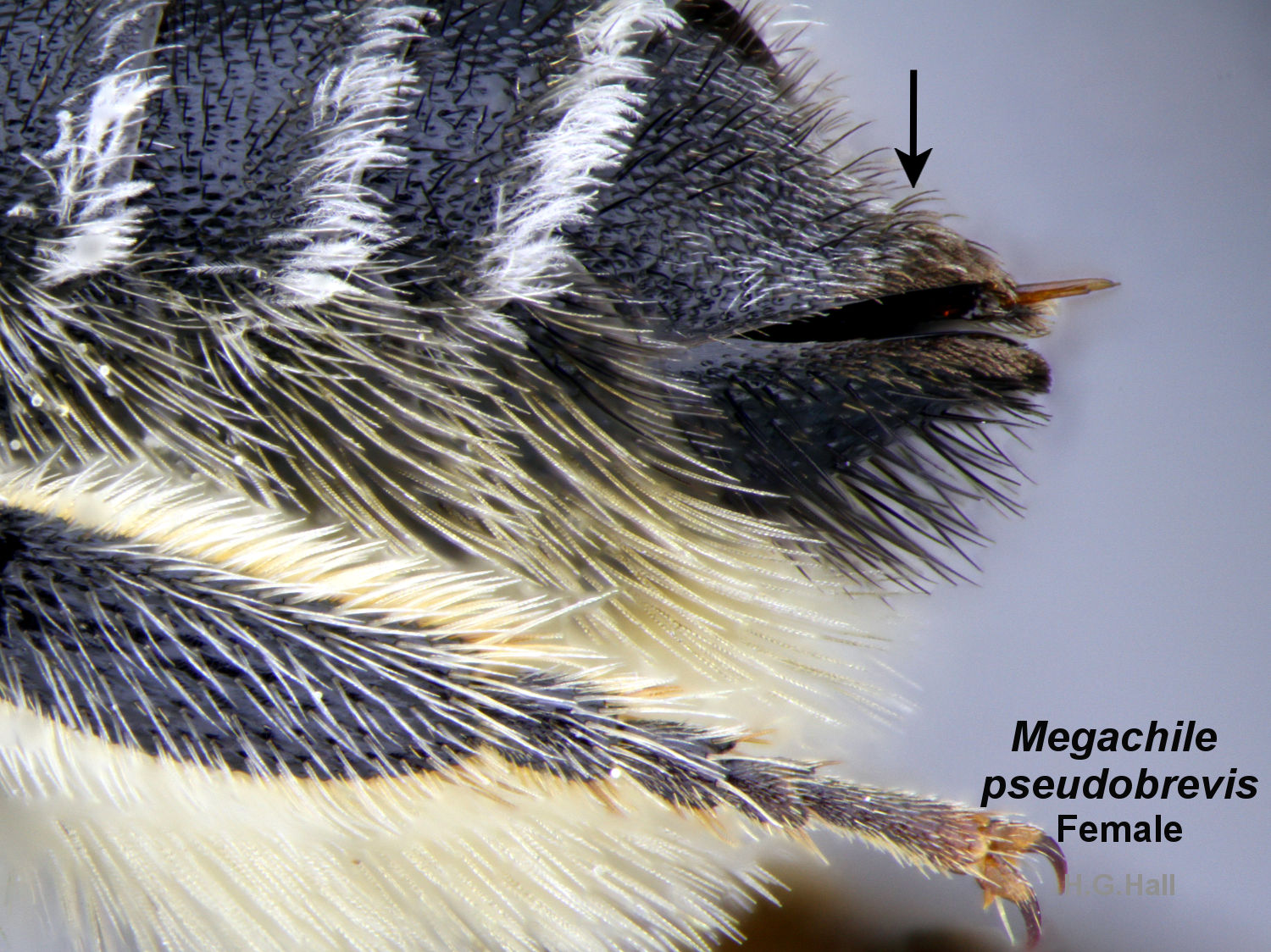
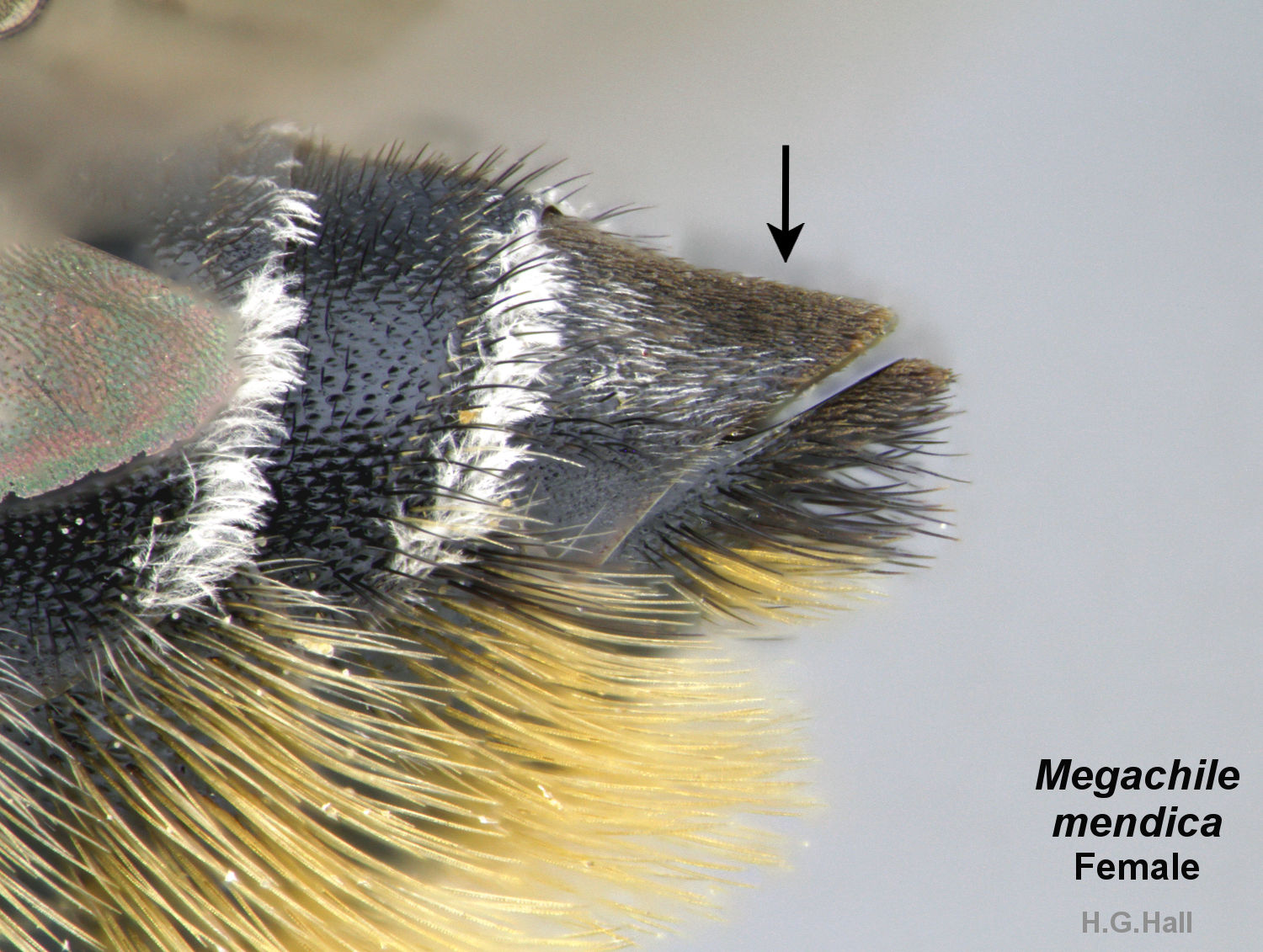
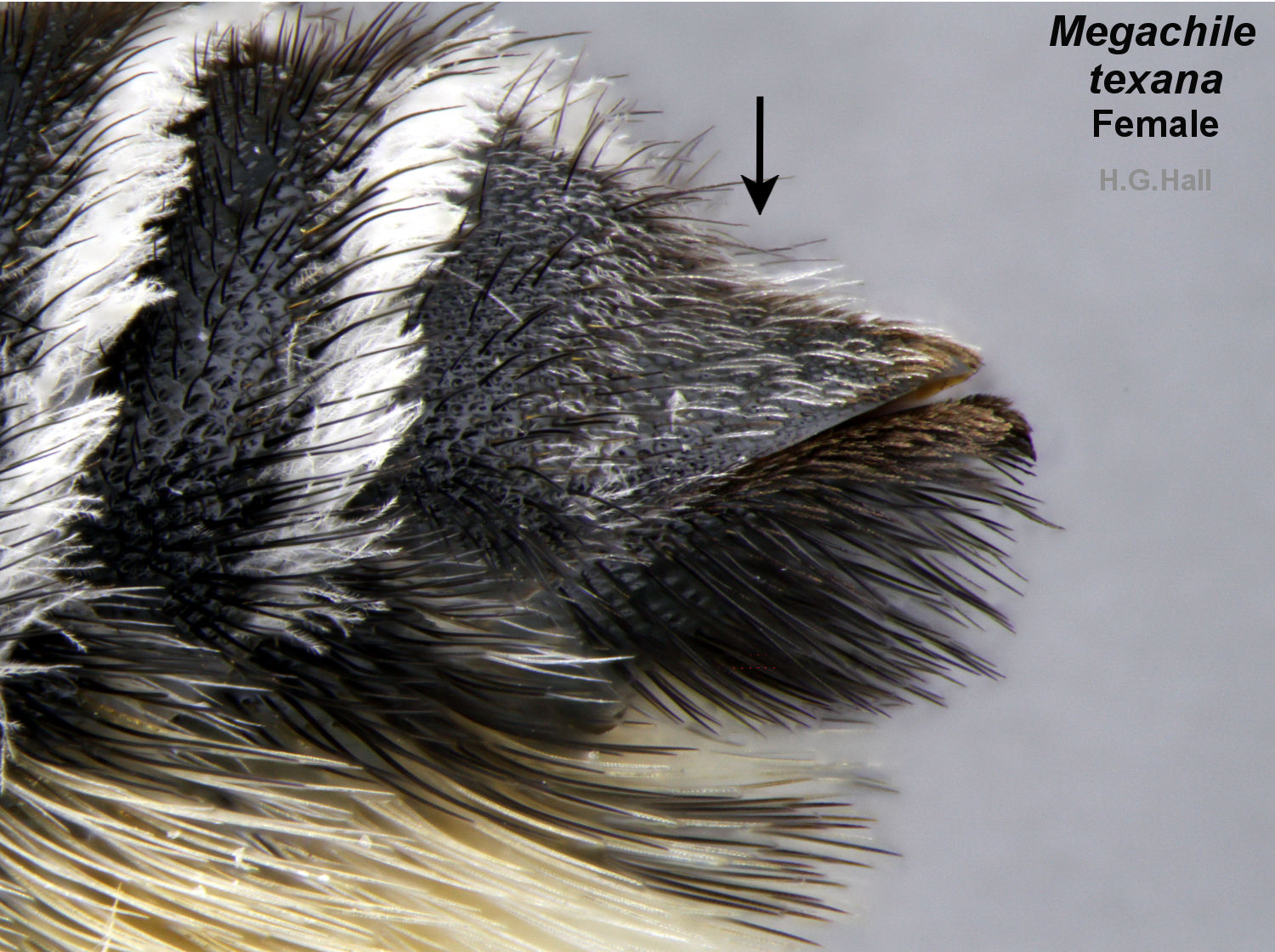
- T6 straight in profile; mandible with second tooth often rounded or obtuse, usually no cutting edge in second interspace..M.
(Megachiloides, in part)
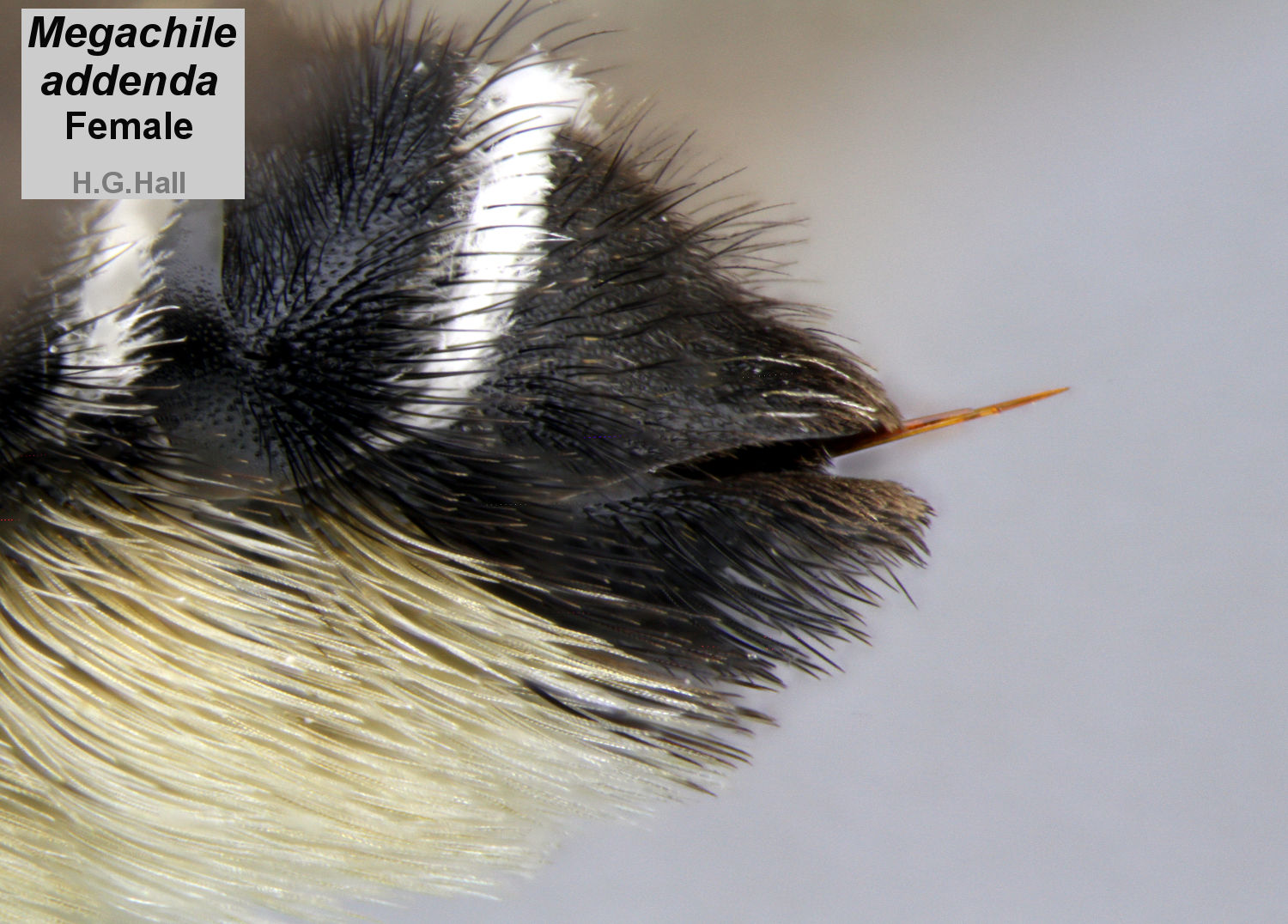
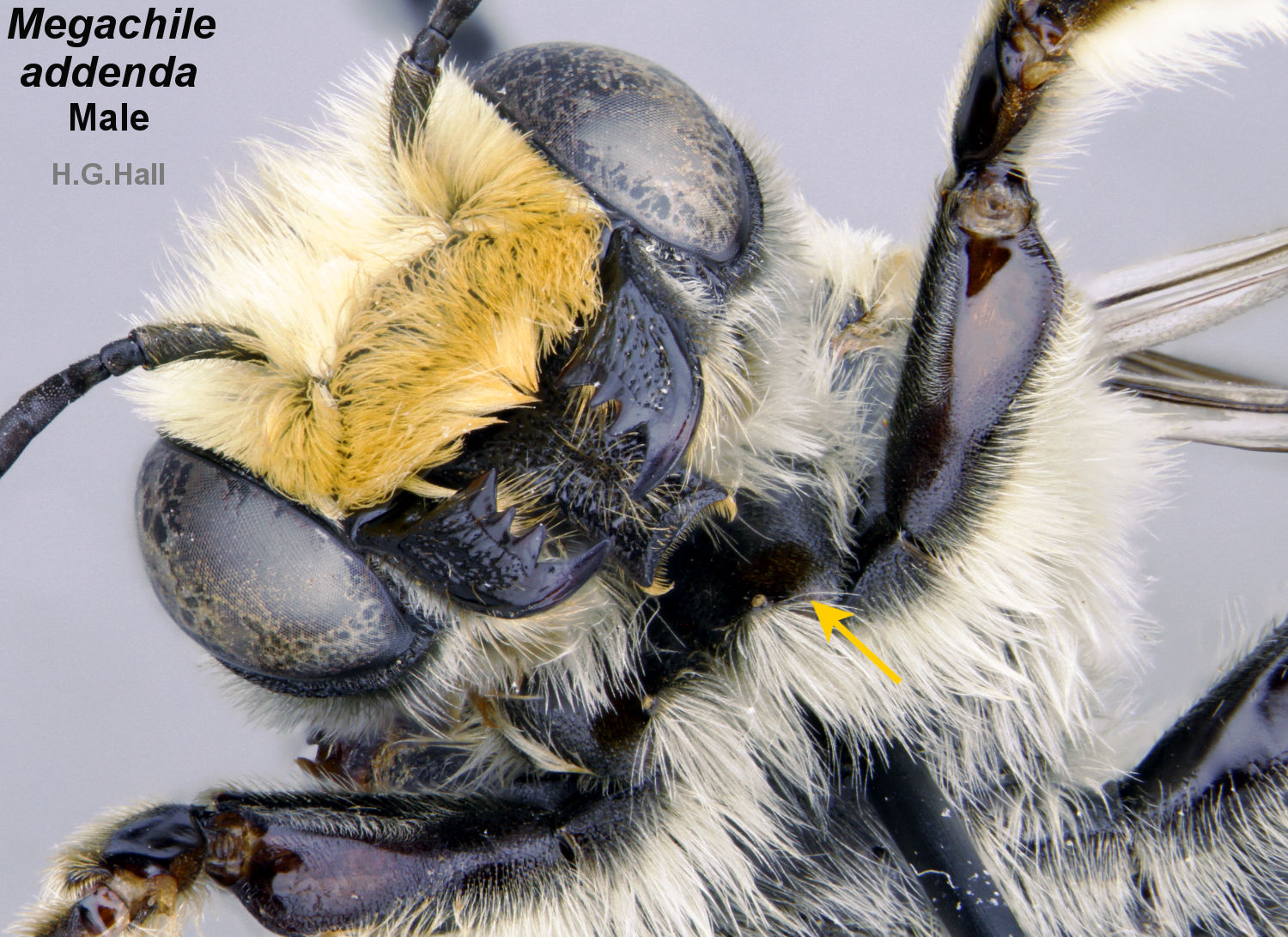
T6 usually concave in profile; mandible with second tooth acute, a small beveled cutting edge in second interspace..M. (Litomegachile), also includes M. addenda (Xanthosarus).
Male
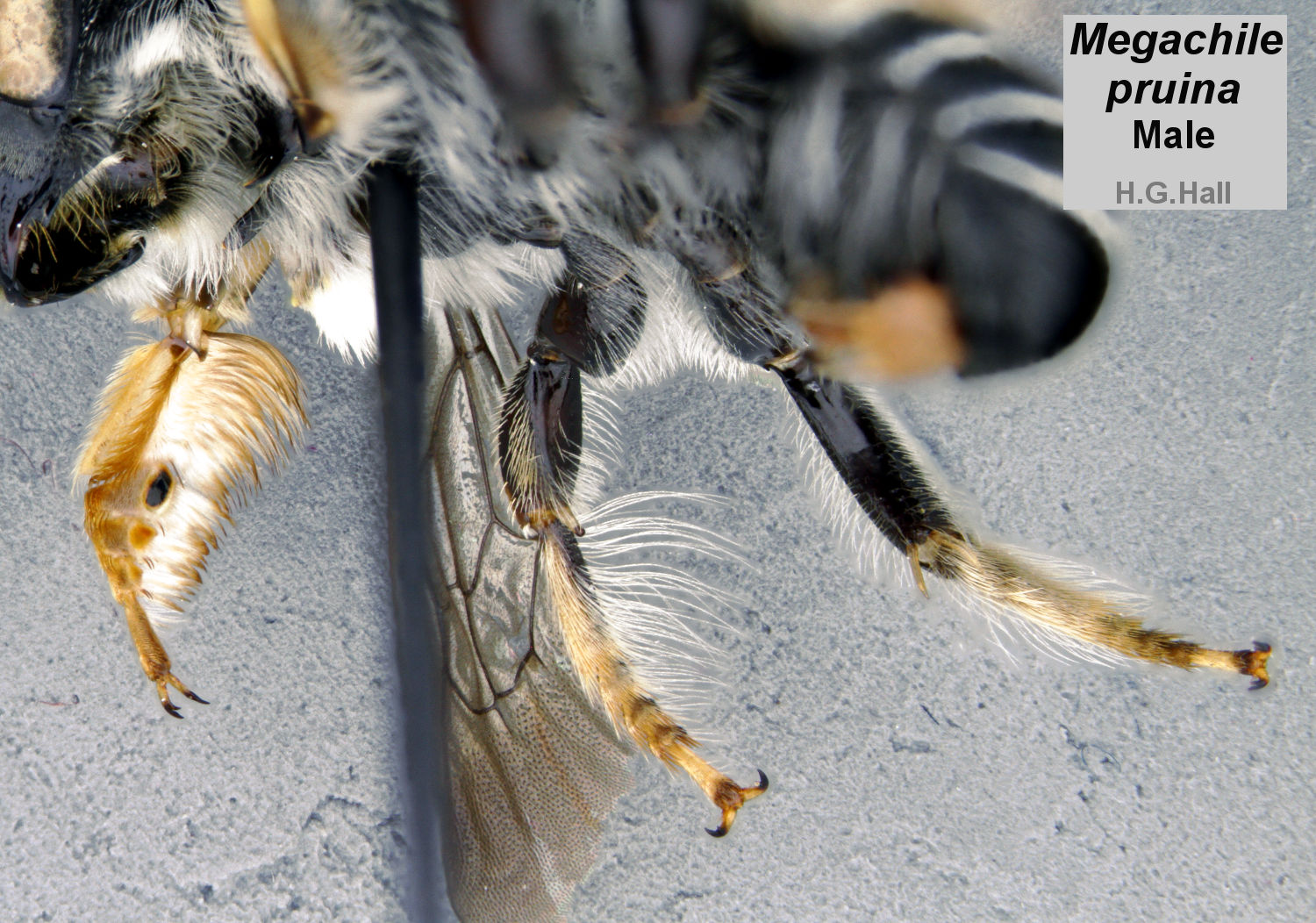
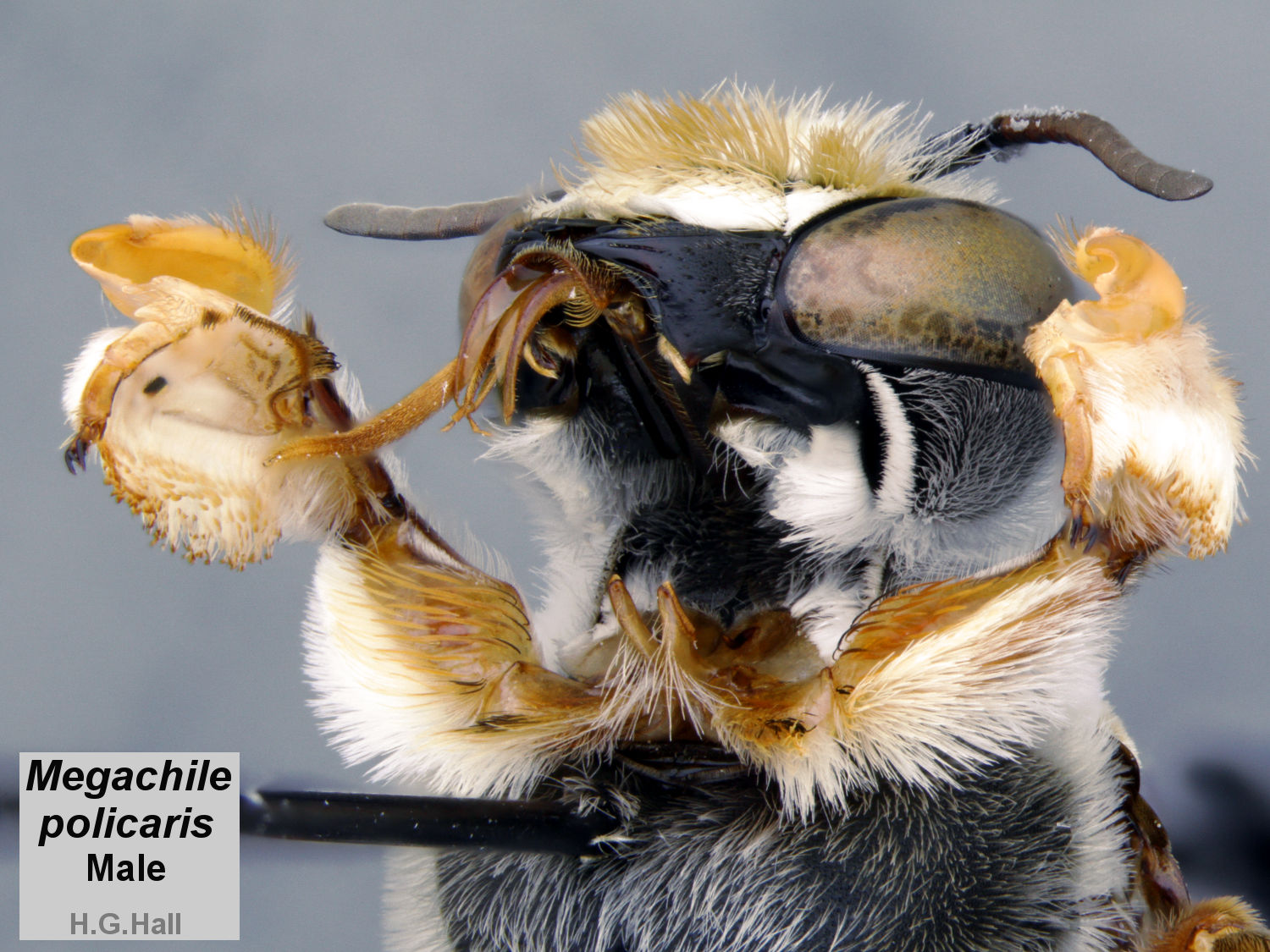
- Middle tibial spur absent or much shorter than apical width of tibia, sometimes immovably fused to tibia, and middle basitarsus not or little modified..2
Middle tibial spur present, articulated to the tibia, about as long as apical tibial width, or, if absent, (as in some species of Xanthosarus), then middle basitarsus modified and swollen..5
- Middle tibial spur present, articulated, but small..M. (Leptorachis)
Middle tibial spur absent or represented by prong immovably fused to tibia...3
- Middle tibia with a spur like apical prong (Spur presumably fused to tibia), prong sometimes reduced to large, acute tooth..M. (Pseudocentron)
Middle tibia without such a process..4
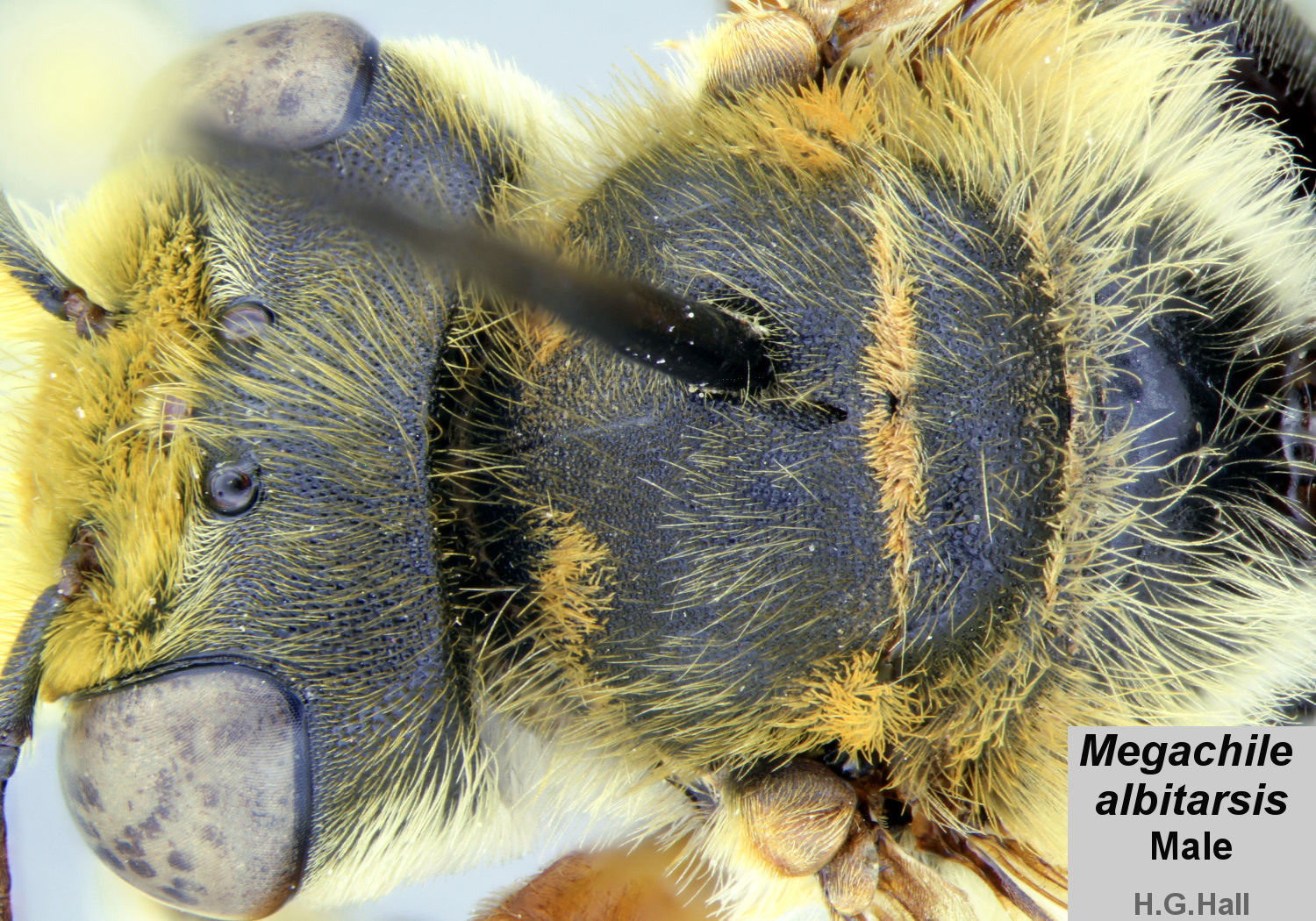
- Scutum finely and densely rugoso-punctate, punctures not individually distinguishable..M. (Acentron)
Punctures of scutum usually well separated, but, if close, then individually distinguishable..M. (Melanosarus)
- S4 not exposed or only its posterior margin exposed; punctation and vestiture of S4 (except sometimes for posterior margin) reduced and different from those of S3..M. (Chelostomoides)
S4 exposed, thus four exposed sterna, punctation and vestiture of S4 similar to those of S3..6
- S8 with hairs on lateral margin, body chalicodomiform, with large areas of black or fulvous hairs forming a striking color pattern..7
S8 without marginal hairs, but discal hairs sometimes extending laterally beyond margin; body usually megachiliform, usually without a striking color pattern..8
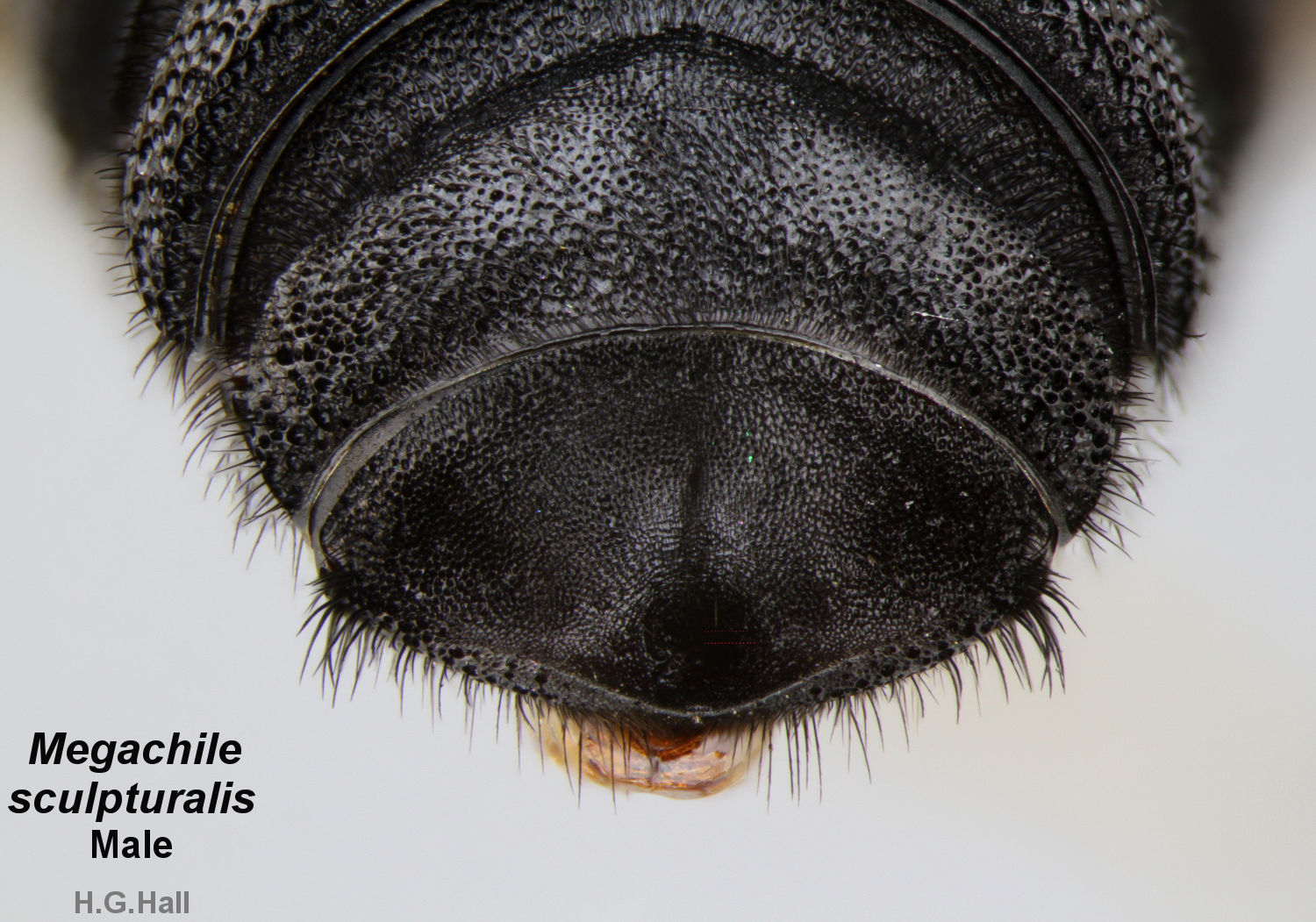
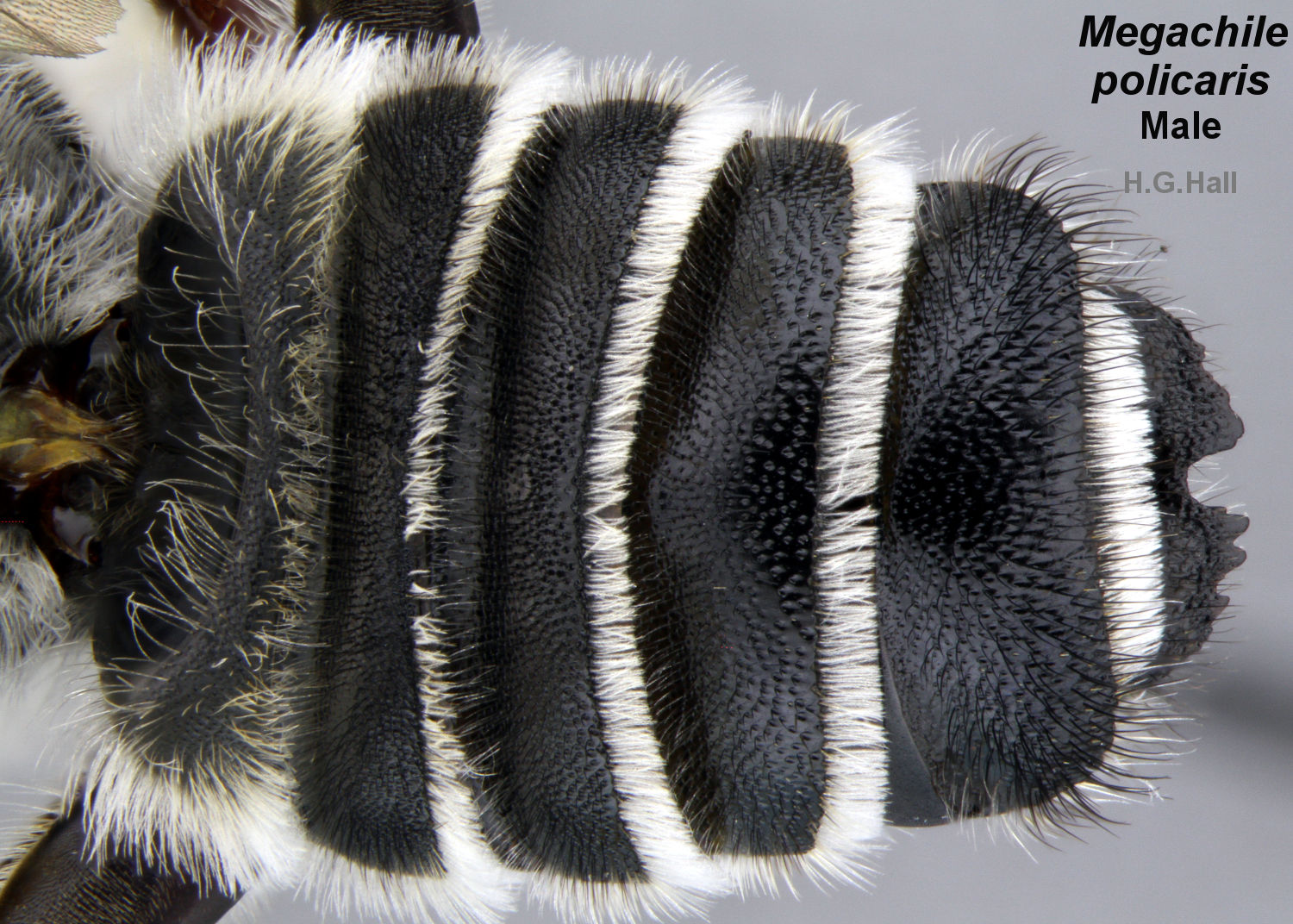
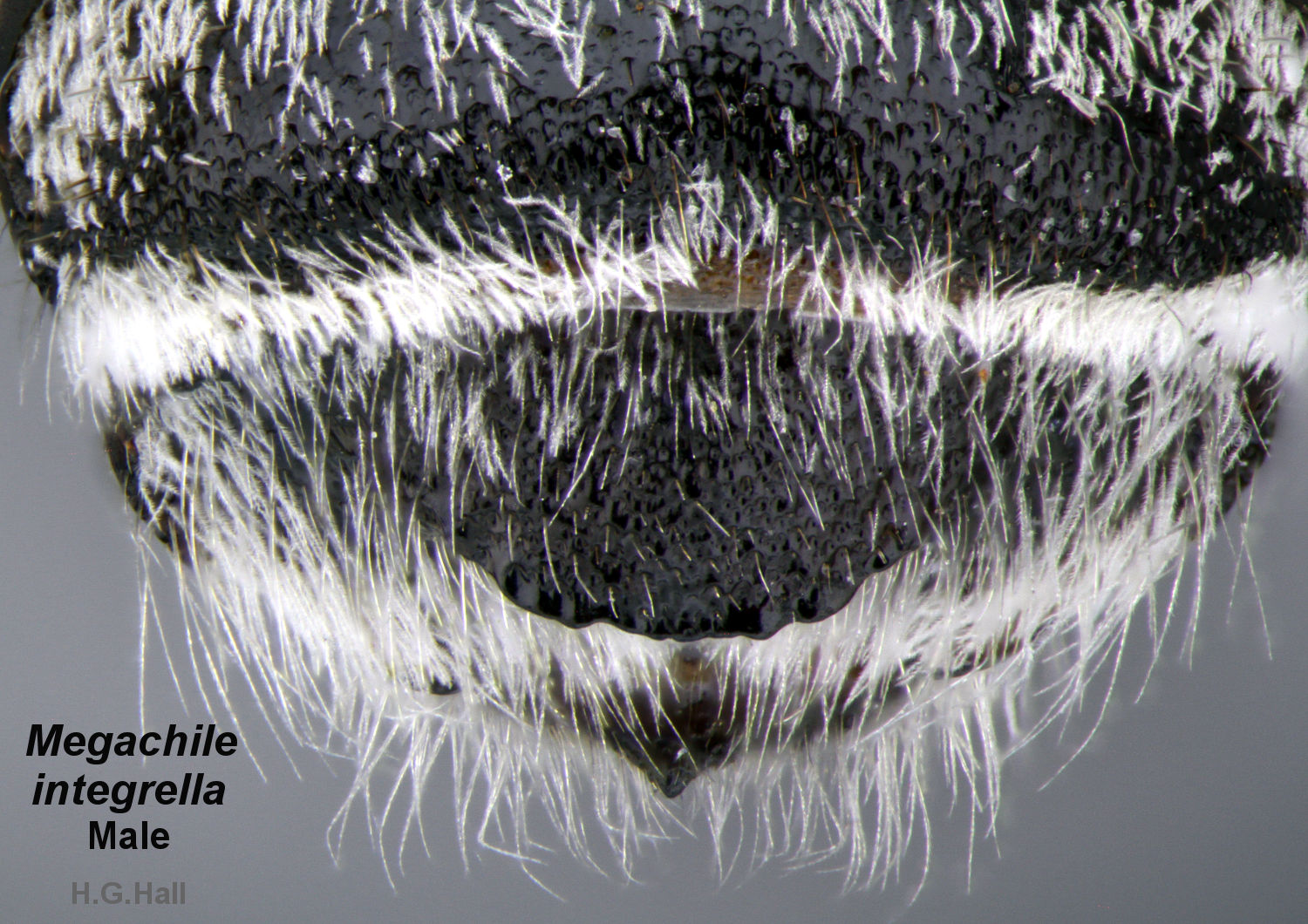
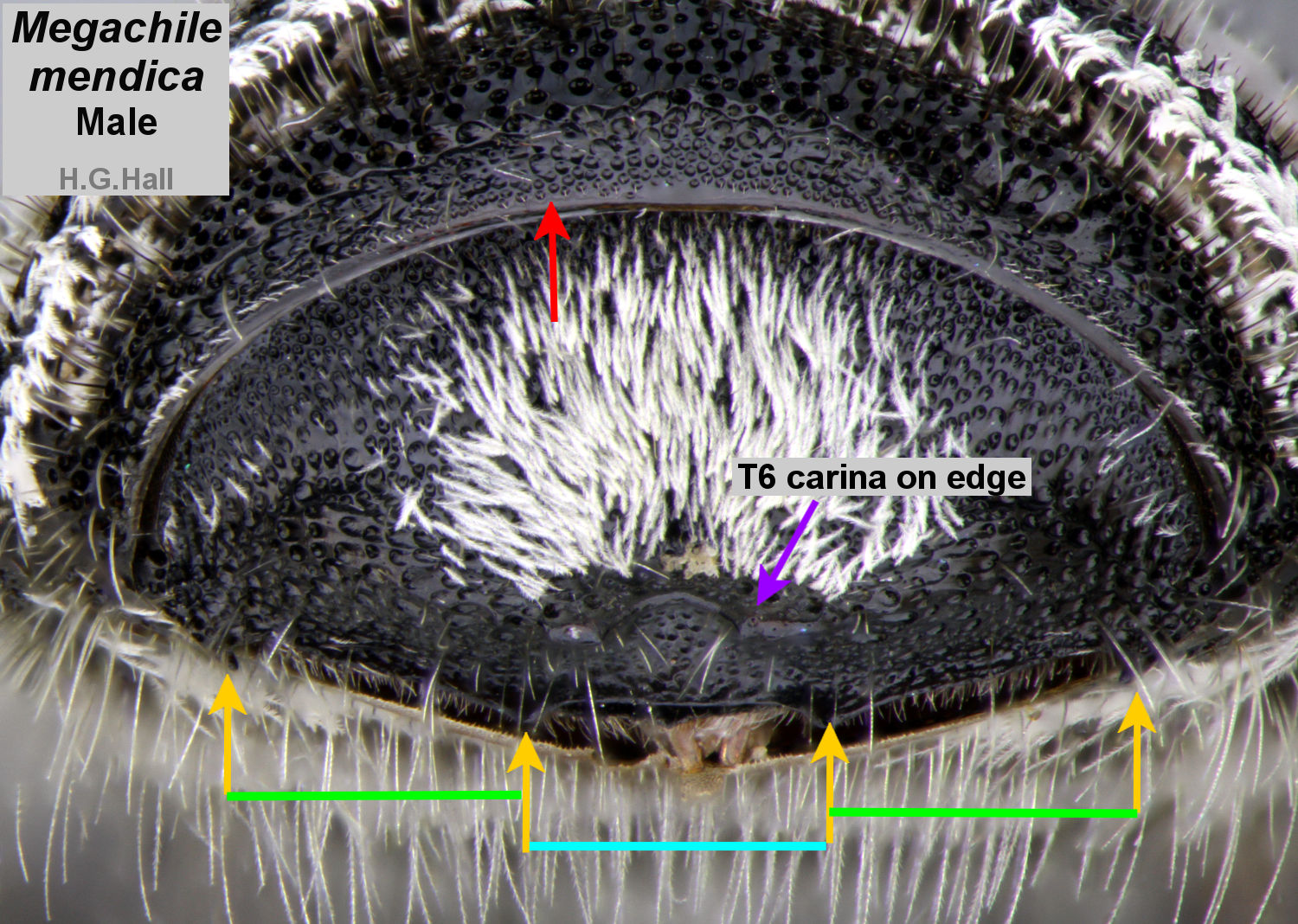
- T6 with carina short, low, not or shallowly emarginate, not denticulate ..Callomegachile
T6 with carina strong, , strongly dentate or denticulate, or sometimes scarcely undulate..M. (Pseudomegachile)
- Metasoma about twice as long as wide (Carina of T6 usually emarginate medially; front tarsus usually enlarged and pale; front coxa with spine and usually with red bristle)..Sayapis
Metasoma less than twice as long as wide..9
- Carina of T6 entire or crenulate, median part the most produced, with no trace of a median emargination..M. (Megachiloides)
Carina of T6 commonly crenulate, median part emarginate or sometimes irregular but not produced..10
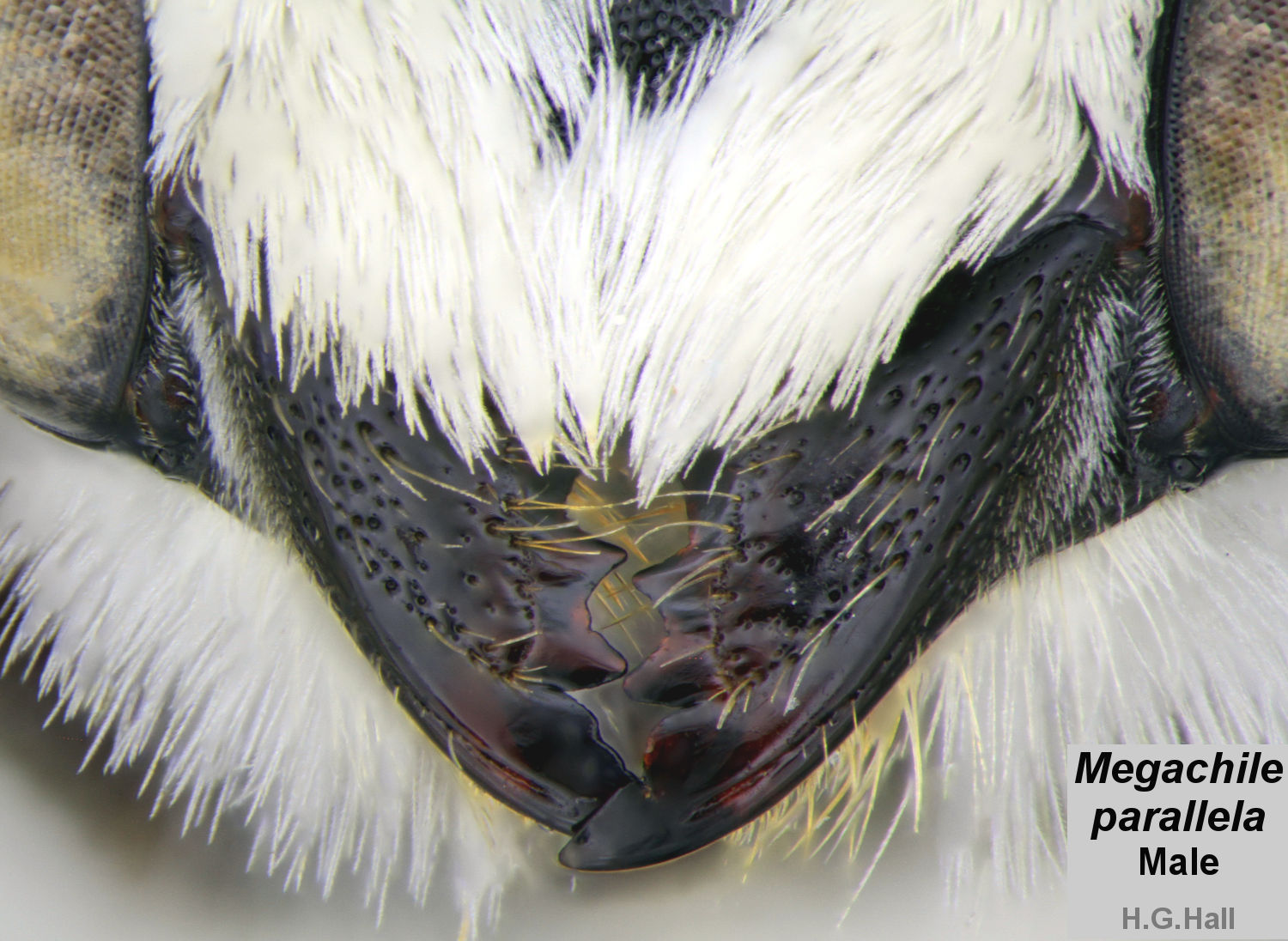
- Mandible four-toothed..11
Mandible three-toothed..12
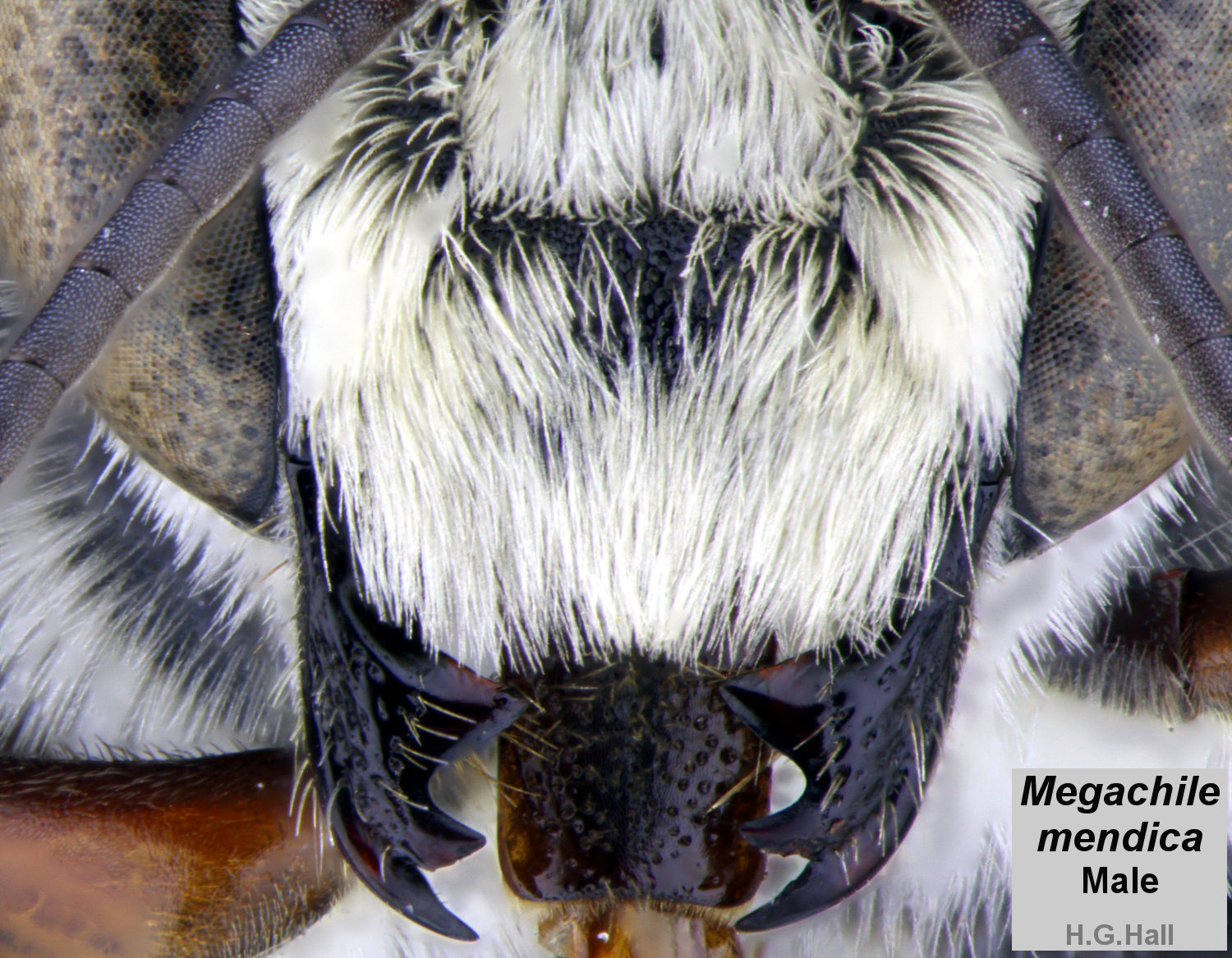
- Front coxa usually largely bare anteriorly, often with patch of short, red bristles in front of spine, front tarsus frequently modified, pallid (holarctic)..M. Xanthosarus
Front coxa hairy, without red bristles; front tarsus simple, dark colored (Neartic)..M. (Argyropile)
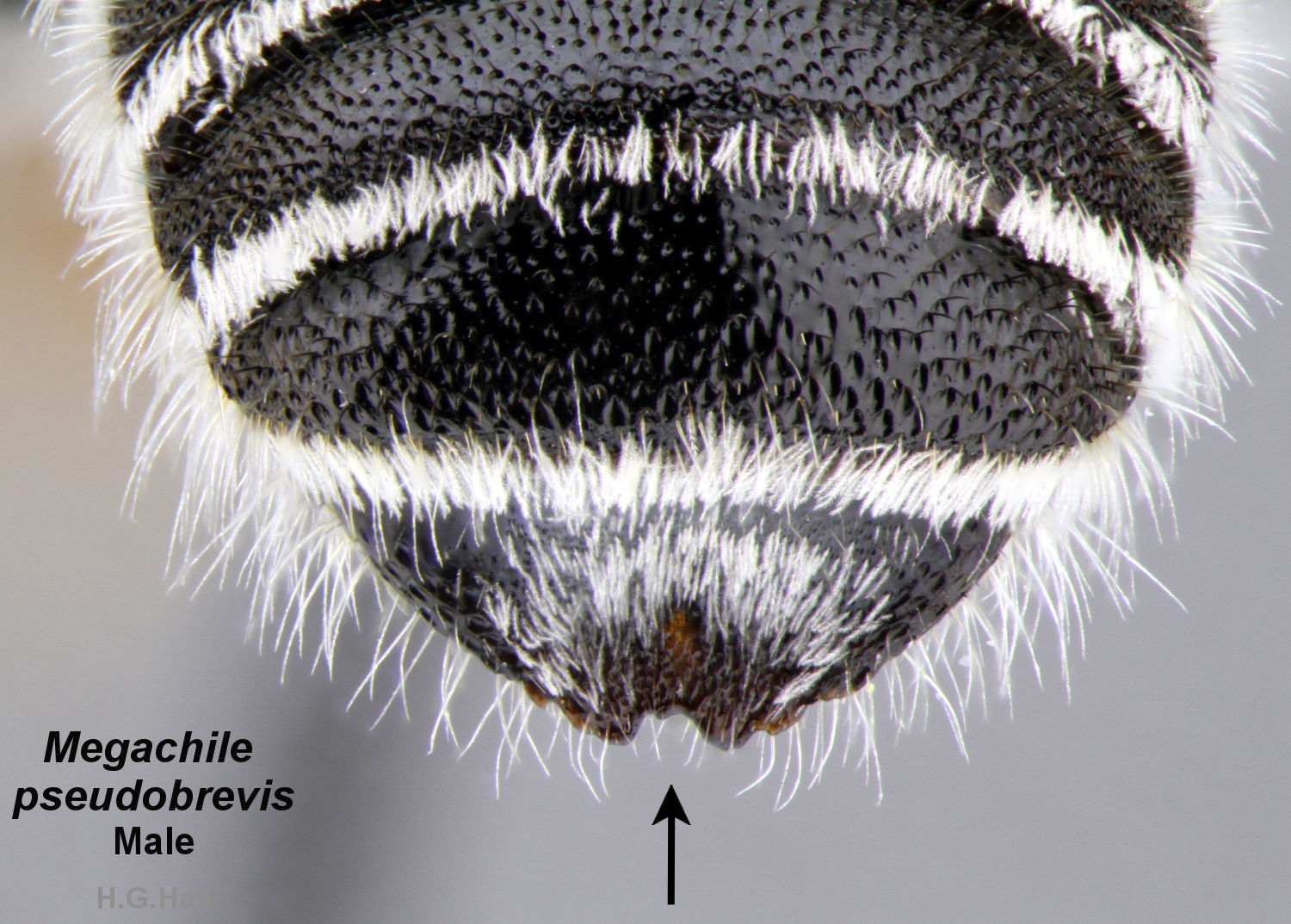
- Morphological apical margin (not carina) of T6 without evident teeth. .M.
(Eutricharaea)
Morphological apical margin of T6 with four small but distinct teeth..M. (Litomegachile)