common name: red admiral
scientific name: Vanessa atalanta rubria (Fruhstorfer) (Insecta: Lepidoptera: Nymphalidae: Nymphalinae)
Introduction - Distribution - Description - Life Cycle and Biology - Hosts - Selected References
Introduction (Back to Top)
The red admiral is a distinctive, medium sized, brightly colored black and orange butterfly that is common throughout much of the United States.
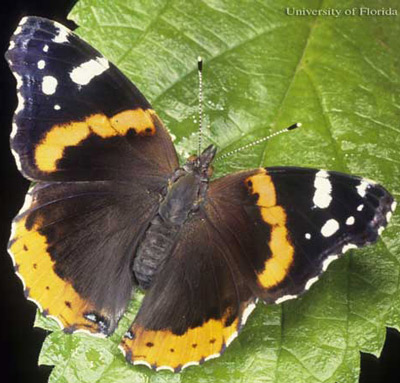
Figure 1. Adult red admiral, Vanessa atalanta rubria (Fruhstorfer), dorsal view. Photograph by J.F. Butler, University of Florida.
Distribution (Back to Top)
The red admiral occurs in Europe, northern Africa, Eurasia, and in North America from northern Canada to Central America. It is also found in Hawaii, New Zealand, and some of the Caribbean Islands (Opler et al. 1984, Scott 1986). Adults are found throughout Florida, but it is not known whether or not there are breeding populations in the Florida Keys (Minno and Emmel 1993).
Description (Back to Top)
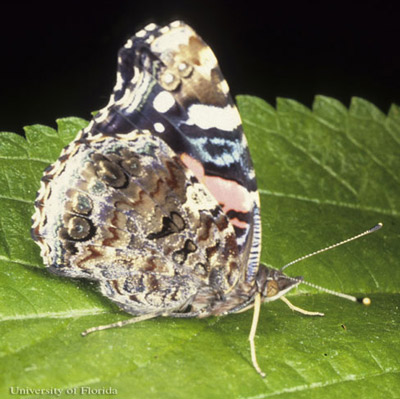
Adult: The wing spread is 1.75 to 2.50 inches (Daniels 2003). The upper side of the wings is black. The front wings have a broad, orange median band with white spots nearer the apex. The hind wings have a marginal orange band. Both fore and hind wings have a series of curved white dashes along the margins. The undersides of the front wings are dark with white spots apically and a pinkish to orange median band. The undersides of the hind wings are marbled.
Figure 2. Adult red admiral, Vanessa atalanta rubria (Fruhstorfer), ventral view. Photograph by J.F. Butler, University of Florida.
Egg: The eggs are light green and are surrounded with a series of white vertical ridges.
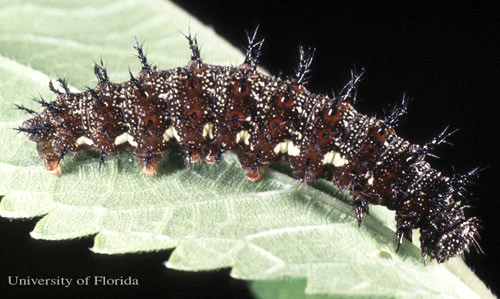
Larva: The larvae are up to 1.4 inches in length (Minno et al. 2005). They are highly variable in color. The head is black with short spines and hairs. The body varies from pale brown with a yellowish stripe on the sides to black with small white spots and a broken white stripe on the sides. Each segment has a transverse row of long, branching dark or pale spines (scoli) with reddish bases.
Figure 3. Larva of the red admiral, Vanessa atalanta rubria (Fruhstorfer). Photograph by J.F. Butler, University of Florida.
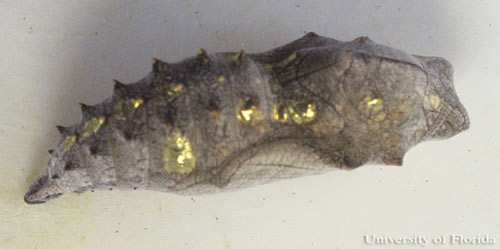
Pupa: The pupa is brown to gray-brown with gold spots and with short spines on the back — some of which are tipped with gold.
Figure 4. Pupa of the red admiral, Vanessa atalanta rubria (Fruhstorfer). Photograph by J.F. Butler, University of Florida.
Life Cycle and Biology (Back to Top)
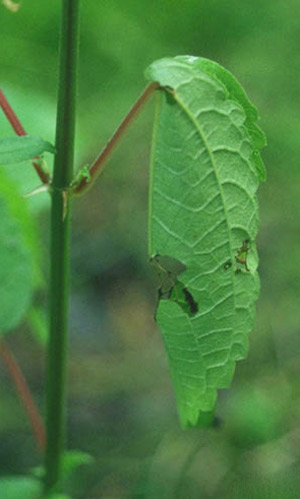
Eggs are laid singly on the leaves of the host plants. The larvae make leaf nests by silking together several of the smaller leaves of Parietaria species or by silking together the sides of the larger leaves of nettles to form a tube. Each caterpillar makes a number of shelters during its lifetime (Wagner 2005). Older larvae chew partially through the petioles of the folded leaf nests causing them to droop (Scott 1986).
Figure 5. Folded leaf nest of the red admiral, Vanessa atalanta rubria (Fruhstorfer), on false nettle. Photograph by D.W. Hall, University of Florida.
Red admirals are most common in moist open areas near woods (Glassberg et al. 2000) where their host plants are commonly found. Males defend territories and fly out to meet females for mating. Red admirals prefer fermenting tree sap, fruit, and fresh dung to flower nectar (Allen 1997, Minno and Minno 1999, Opler and Krizek 1984). However, they also drink nectar from a variety of flowers (Cech and Tudor 2005, Tooker et al. 2002). They also drink from moist soil (Minno and Minno 1999).
There are two generations per year in the northern parts of the distribution and as many as four or more in the southern U.S. (Scott 1984). In the U.S., adults overwinter in the southern part of the range, and more northerly areas are re-colonized each year (Opler et al. 1984, Scott 1986) with the migrating butterflies sometimes forming mass migrations. Walker (2001) reported spring migrations northward in Florida but no significant southward migration during the fall. There is some disagreement concerning whether or not pupae overwinter. Cech and Tudor (2005) and Wagner (2005) state that pupae may overwinter in some parts of the range, but Scott (1986) is doubtful that pupae overwinter.
Hosts (Back to Top)
Larvae feed on herbs in the nettle family (Urticaceae) – most commonly plants in the genera Urtica, Boehmeria, Laportea, and Parietaria. In Florida, the most common hosts are: false nettle (Boehmeria cylindrica [L.]Sw.), Florida pellitory (Parietaria floridana Nutt.), heartleaf nettle (Urtica chamaedryoides Pursh) and the naturalized exotic stinging nettle (Urtica dioica L.) and burning nettle (Urtica urens L.). Canadian wood nettle (Laportea canadensis [L.]Wedd.) is commonly utilized farther north but this species is rare in Florida and restricted to the Panhandle. Plant names are from Wunderlin et al. (2018) and Wunderlin and Hansen (2008).
Figure 6. False nettle, Boehmeria cylindrical [L.]Sw., a host of the red admiral, Vanessa atalanta rubria (Fruhstorfer). Photograph by D.W. Hall, University of Florida.
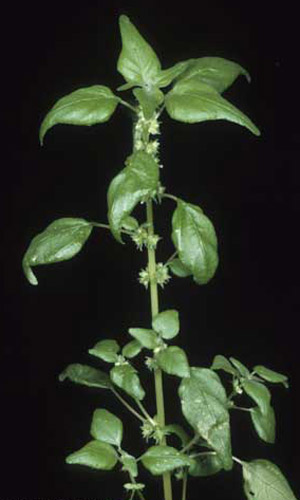
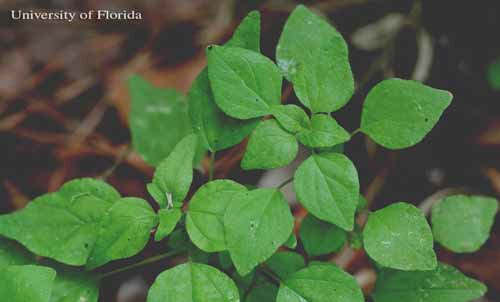
Figure 7. Florida pellitory, Parietaria floridana Nutt., a host of the red admiral, Vanessa atalanta rubria (Fruhstorfer). Photograph by D.W. Hall, University of Florida.
Figure 8. Florida pellitory, Parietaria floridana Nutt., a host of the red admiral, Vanessa atalanta rubria (Fruhstorfer). Photograph by D.W. Hall, University of Florida.
Figure 9. Canadian wood nettle, Laportea canadensis [L.]Wedd., a host of the red admiral, Vanessa atalanta rubria (Fruhstorfer). Photograph by D.W. Hall, University of Florida.
![False nettle, Boehmeria cylindrical [L.]Sw., a host of the red admiral, Vanessa atalanta rubria (Fruhstorfer).](red_admiral06.jpg)
![Canadian wood nettle, Laportea canadensis [L.]Wedd., a host of the red admiral, Vanessa atalanta rubria (Fruhstorfer).](red_admiral09.jpg)
Selected References (Back to Top)
- Allen TJ. 1997. The Butterflies of West Virginia and their Caterpillars. University of Pittsburgh Press. Pittsburgh, Pennsylvania. 400 pp.
- Cech R, Tudor G. 2005. Butterflies of the East Coast: An Observer's Guide. Princeton University Press. Princeton, New Jersey. 345 pp.
- Glassberg J, Minno MC, Calhoun JV. 2000. Butterflies through Binoculars: Florida. Oxford University Press. New York, New York. 256 pp.
- Minno MC, Butler JF, Hall DW. 2005. Florida Butterfly Caterpillars and their Host Plants. University Press of Florida. Gainesville, Florida. 341 pp.
- Minno MC, Emmel TC. 1993. Butterflies of the Florida Keys. Scientific Publishers. Gainesville, Florida. 168 pp.
- Minno MC, Minno M. 1999. Florida Butterfly Gardening: A Complete Guide to Attracting, Identifying, and Enjoying Butterflies of the Lower South. University Press of Florida. Gainesville, Florida. 210 pp.
- Opler PA, Krizek GO. 1984. Butterflies East of the Great Plains. The Johns Hopkins University Press. Baltimore, Maryland. 294 pp.
- Scott JA. 1986. The Butterflies of North America: A Natural History and Field Guide. Stanford University Press. Stanford, California. 583 pp.
- Tooker JF, Reagel PF, Hanks LM. 2002. Nectar sources of day-flying Lepidoptera of central Ilinois. Annals of the Entomological Society of America. 95: 84-96.
- Wagner DL. 2005. Caterpillars of Eastern North America. Princeton University Press. Princeton, New Jersey. 512 pp.
- Walker TJ 2001. Butterfly migrations in Florida: seasonal patterns and long term changes. Environmental Entomology 30: 1052-1060.
- Wunderlin RP, Hansen BF. 2003. Guide to the Vascular Plants of Florida. 2nd ed. University Press of Florida. Gainesville, Florida. 787 pp.
- Wunderlin RP, Hansen BF, Franck AR, Essig FB. 2021. Atlas of Florida Plants (http://florida.plantatlas.usf.edu/). Institute for Systematic Botany. University of South Florida. Tampa, Florida.